


-
Call Us
+8619906035385 -
Email us
ping@aotbattery.com
Call Us
+8619906035385Email us
ping@aotbattery.com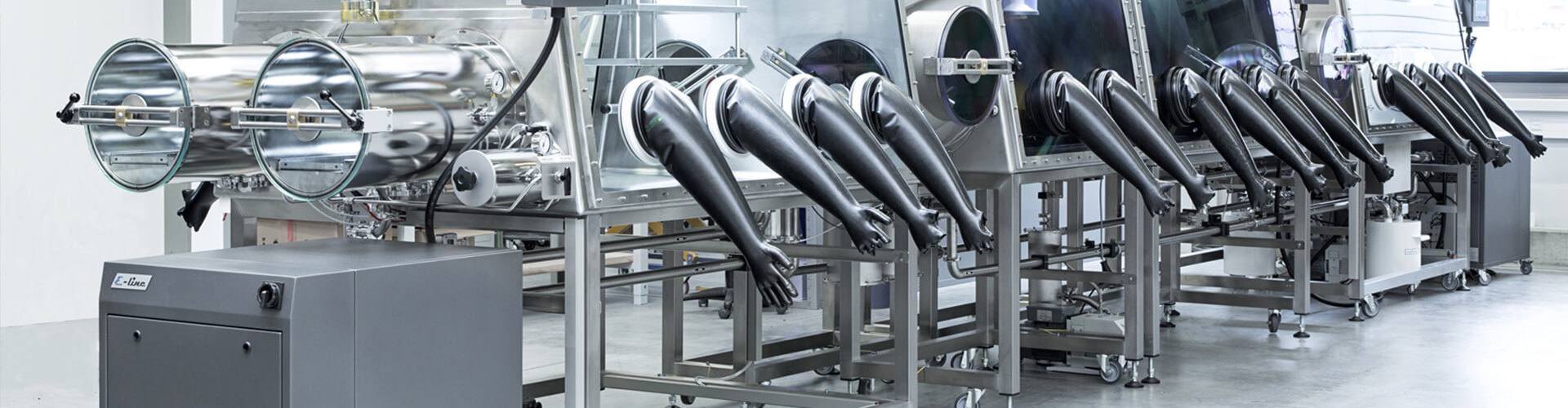
1. What Is a Battery Spot Welder?
A battery spot welder is a precision resistance welding machine designed specifically for lithium battery pack assembly. It uses millisecond-level, high-current pulses combined with electrode pressure to generate localized Joule heating at the contact surfaces between cell terminals, tabs, and nickel strips or busbars. Without adding solder and without spreading heat over a large area, it forms metallurgical weld joints. Unlike ordinary soldering irons, it concentrates heat and acts for an extremely short time, avoiding the risk of prolonged high-temperature damage to the cell separator and the explosion-proof valve. It is a core piece of equipment in the production of consumer lithium batteries, energy storage systems, and power tool battery modules.
The Role of a Battery Spot Welder
Its core function is to connect individual cells into battery packs by series and parallel combinations using nickel strips, ensuring stable current conduction while maintaining low weld resistance, vibration resistance, and resistance to weld detachment. Weld quality directly determines the current-carrying capacity, cycle life, and safety performance of a battery pack. Whether for power banks, electric bicycle batteries, energy storage modules, or power battery packs, cell connections are completed through spot welding. Many failures in lithium battery packs sold to end customers are not caused by problems with the protection board or BMS, but by substandard spot welds. A single high-resistance cold weld in a battery module will continue to heat up under load, causing the voltage difference across the pack to drift gradually. A battery pack that could originally cycle 2,000 times may have its service life reduced to fewer than 400 cycles. Purchasing professionals who understand spot welding pay more attention to the equipment’s actual performance under real operating conditions when selecting equipment, rather than a simple claim such as “reliable quality and stable performance” on a brochure.
2. Principle of Battery Spot Welding: Weld Quality Determines Battery Pack Safety
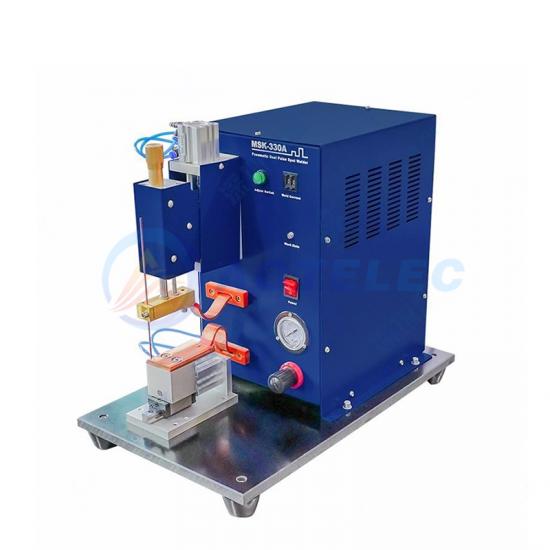
Resistance battery spot welding passes a short-duration, high-current pulse through the contact surface between the nickel strip and the cell tab. With electrode pressure, heat is generated through contact resistance, melting and fusing the materials to form a weld nugget. Current waveform, pulse duration, electrode pressure, and electrode coaxiality are all used to control the formation of this weld nugget.
When the process is properly controlled, the weld nugget diameter is kept within 4–6 mm, the weld pull force can reach 60–120 N, and the increase in cell internal resistance after welding is less than 2%. If the process is inadequate, two risks may occur: insufficient energy can cause cold welding, where the weld looks intact but detaches after vibration or charge-discharge cycling; excessive energy can burn through the cell’s explosion-proof valve and damage the sealing structure, causing slow electrolyte leakage and creating a potential risk of thermal runaway.
3. Real Application Scenarios
High-Volume Continuous Production Line Scenarios
In a two-shift pack workshop, a rotary spot welder needs to complete 3,000–4,000 welds per hour. The real test for the equipment is not the first few hundred welds, but continuous production up to and beyond the 40,000th weld. During long-term operation, electrode tips deform, contact areas increase, and welding resistance drifts. Equipment equipped with automatic weld-count monitoring and electrode dressing reminders can keep the weld nugget diameter stable within ±0.2 mm during an 8-hour shift. Ordinary models without closed-loop compensation allow parameters to drift unnoticed; by the time quality inspection detects defective products, a large number of cells have already been scrapped.
High-Temperature Workshop Conditions
Many processing plants in southern China do not have temperature-controlled workshops, and ambient temperatures in summer can reach 38–42°C. In traditional transformer-based spot welders, as the coil temperature rises, current output accuracy continues to decline. In contrast, DC inverter spot welders can maintain ±1% current output accuracy even after 72 hours of continuous operation at 40°C. When purchasing, do not rely solely on color brochure specifications; prioritize requesting test reports for continuous high-temperature operation.
Welding Thin Tabs on Pouch Cells
Welding a 0.1 mm aluminum tab to a 0.1 mm nickel sheet requires low energy and an extremely fast current rise time, with the rise time controlled within 2 ms. If the equipment’s pulse interval is only 10–20 ms, spatter and tab burn-through can easily occur during welding, directly scrapping the pouch cell.
4. Process Comparison: How to Choose Between Resistance Spot Welding, Laser Welding, and Ultrasonic Welding?
Resistance spot welding: It offers the best cost-performance ratio and strong versatility. It is compatible with 0.1–0.3 mm nickel-plated steel strips and pure nickel strips, requires no filler material, and is easy to rework. It is the mainstream solution for mass production of 18650 and 21700 cylindrical cell packs and is suitable for production lines with a monthly capacity of up to 20,000 packs.
Laser welding: Its advantages are non-contact welding and high speed, making it suitable for weld points in confined spaces. However, it has extremely strict requirements for workpiece tolerances, requires matching fume purification equipment, and involves high capital investment per machine. For small-batch prototyping and sample R&D, laser welding is not cost-effective.
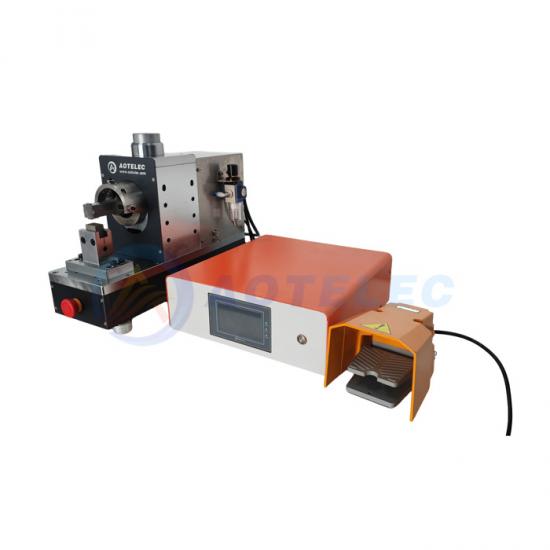
Ultrasonic welding: It involves no heat input and will not burn the cell separator, so it is commonly used for aluminum-to-aluminum tab welding and pouch cell tab welding. Its disadvantages are that the welding head tooling is highly product-specific, requiring custom tooling when switching products, and the welding speed is slow.
Objective conclusion: For mass production of conventional cylindrical lithium battery packs, resistance spot welding machines should be the first choice; laser welding and ultrasonic welding should only be used as supplementary solutions for special structures and special materials. Claims that a single welding process can solve all cell...
Fixed Parameters vs. Multiple Programmable Welding Programs
Equipment that can store more than 50 welding recipes allows switching between different products, such as 18650 pure nickel strips and 21700 copper-nickel composite strips, without repeatedly adjusting parameters. When a single production line produces four battery pack models simultaneously, each changeover can save 30–45 minutes of debugging time.
5.FAQ
1. Can battery spot welding damage 18650 cells?
It will not, as long as the parameters are properly controlled. When welding with 0.15 mm pure nickel strip, the pulse duration is kept within 15 ms, the energy per spot weld is kept within 40 J, and the temperature rise of the cell cap is less than 15°C, the capacity shows almost no degradation. Cell damage is basically caused by excessive welding energy, not by the spot welding process itself.
2. How thick a nickel strip can one battery spot welding machine weld?
A conventional 1500 A DC inverter model is suitable for 0.1–0.3 mm nickel-plated steel strip and 0.1–0.2 mm pure nickel strip. If the nickel strip thickness exceeds 0.3 mm, the current and electrode pressure need to be increased, and it is recommended to change the welding solution.
3. The weld spot looks fine, but the pull test fails. What is the reason?
In most cases, this is due to electrode wear or insufficient pressure. It is recommended to calibrate the welding head pressure with a pressure sensor once a month and to dress the electrodes at regular intervals based on a fixed number of welds, rather than relying on visual inspection to judge the electrode condition.
4. Can one machine weld 18650 and 21700 cells at the same time?
Yes. As long as the tooling and fixtures are adjustable, the equipment can store two sets of independent welding parameters. There is no need to change the welding tips; simply switch products and call up the corresponding recipe.
5. Do the welding parameters for nickel-plated steel strip and pure nickel strip need to be distinguished?
Yes. Pure nickel has a lower electrical resistivity, so for the same weld nugget size, the welding energy should be reduced by 15%–25%. In addition, the work-hardening characteristics of pure nickel differ from those of nickel-plated steel strip, and the rate of electrode wear is also different.
7. How long can spot welding electrode tips generally last?
When welding 0.15 mm nickel strip with chromium-copper electrodes under conditions of 3,000 welds per hour, one pair of electrodes can complete 8,000–15,000 welds; tungsten electrodes have a shorter service life. When calculating costs, the consumable cost should be calculated per 1,000 welds, rather than treating them as annual procurement items.

Tel/Whatsapp: +8619906035385

Friend link :
AOT BATTERY IPv6 network supported
Scan to wechat: