


-
Call Us
+8619906035385 -
Email us
ping@aotbattery.com
Call Us
+8619906035385Email us
ping@aotbattery.com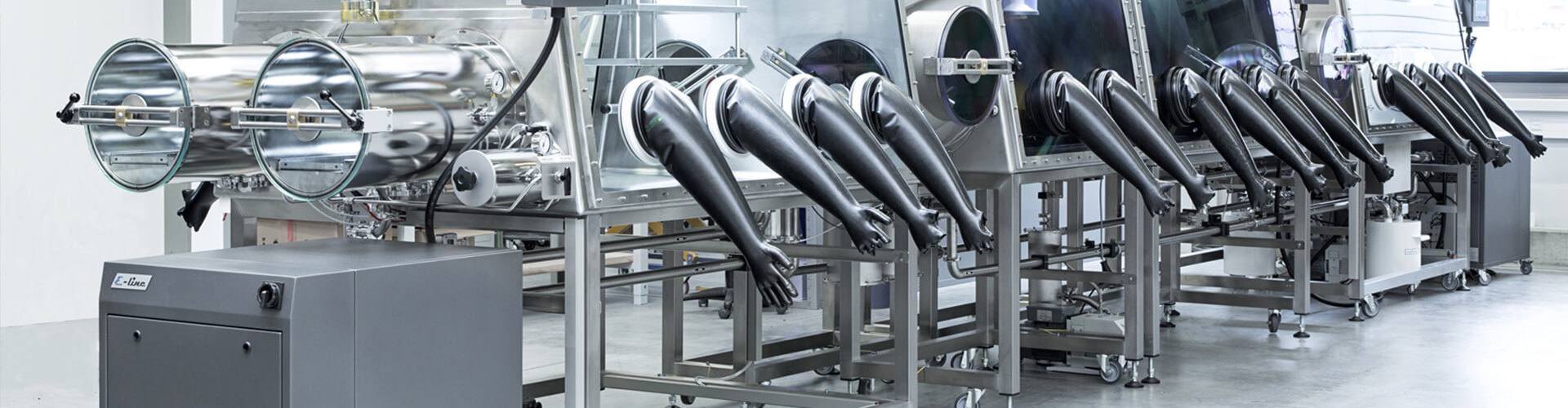
1. What is a Battery Powder Press Machine
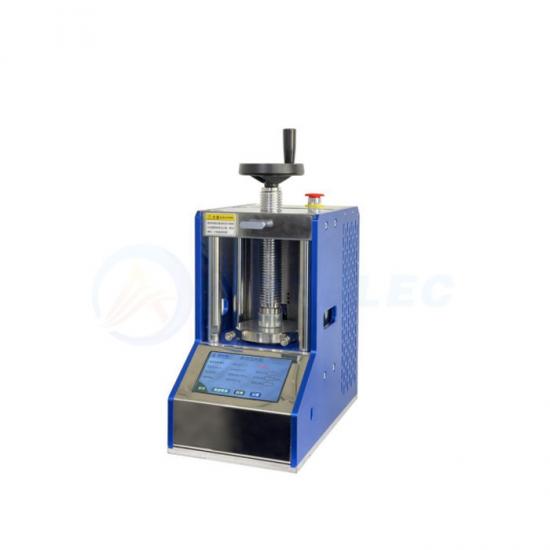
The battery powder press machine (also known as lithium battery powder press machine, laboratory powder press machine, battery electrode forming machine) is a powder forming equipment specially developed for the research and sample preparation of lithium batteries, sodium batteries, and solid-state battery materials. It applies controlled pressure to positive and negative electrode active substances, solid electrolytes, etc., in loose powder form through molds and pressure systems, pressing them into precisely sized, uniformly dense round, square, or irregular-shaped samples. It is the core equipment in the preparation process of button cells and half cells, connecting the powder formulation with electrochemical testing.
2. Core Function and Main Features
Core function
(1) Powder compaction molding: This process compresses loose battery powder materials into electrode samples with a fixed geometric shape and target density, meeting the physical requirements for subsequent battery assembly, impedance testing, and cycle performance testing. It is the key molding step for converting powder into electrodes.
(2) Uniform sample variables: Precisely control the pressure, holding time, and depressurization rate to significantly reduce the thickness and density differences between samples from the same batch and across batches, eliminating experimental errors caused by the molding process and ensuring the reproducibility and comparability of electrochemical test data.
(3) Preparation of sensitive materials: Combined with a clean structure and glove box matching design, it can complete the compression molding of sensitive powders such as sulfides and high-activity cathodes in an airtight and moisture-free environment, preventing powder from absorbing moisture and oxidizing, and ensuring the accuracy of material intrinsic performance tests.
3. Real application scenarios
(1) University and enterprise R&D laboratory scenarios: Used for the formulation development and performance verification of cathode materials such as lithium iron phosphate, ternary materials, silicon-carbon negative electrodes, and hard carbon. Combined with different specifications and standards molds, it can quickly prepare round electrode sheets for button cells and support multiple parallel experiments; stable pressing accuracy can effectively eliminate molding process variables, making the material performance comparison experimental data more persuasive, and significantly reducing the re-testing rate.
(2) Solid-state battery R&D scenarios: For sulfide and oxide solid-state electrolyte powders that are sensitive to moisture and oxygen, a glove box matching type machine can be selected to complete the compression molding under normal temperature/high-temperature pressure holding in an airtight and moisture-free environment. The uniformity of the molding density directly affects the ion conductivity test results, and high-precision pressure control can significantly reduce experimental errors, avoiding misjudgment of material intrinsic performance due to molding issues.
(3) Small-batch pilot production and customer sample submission scenarios: Focused on the needs of cell manufacturing enterprises' pilot lines and material manufacturers' customer sample submissions, it can batch-produce standardized electrode samples. It supports presetting multiple sets of process parameters and one-click switching for different material formulations; under continuous operation, the pressure output is stable, ensuring the performance consistency of the sample batch and laboratory small samples, reducing the objections and communication costs during the customer verification stage.
4. Selection comparison analysis
Comparison 1: Manual hydraulic press vs. servo-controlled battery powder press machine
Comparison dimension
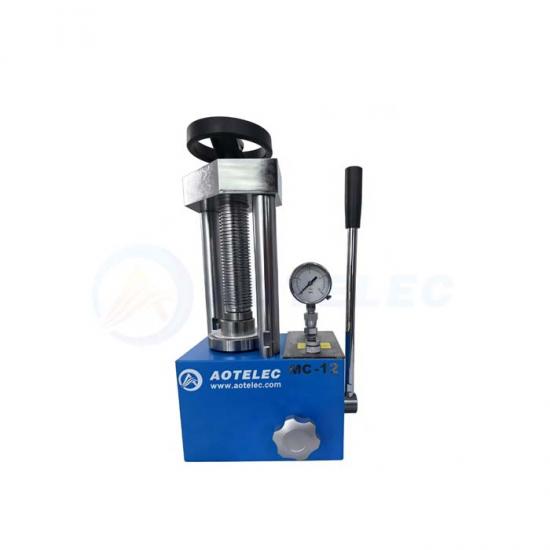
Manual hydraulic tablet press
Servo-controlled programmed battery powder tablet press
Pressure control method
Manually operate the hand pump to apply pressure, and visually read the pressure gauge reading.
Servo motor drive, pressure sensor closed-loop control
Process programmability
No. The entire process is operated manually.
Support programming for pressurization speed, holding pressure duration, and depressurization curve.
Pressure accuracy
The error is generally more than ±2 MPa, and it is greatly influenced by human factors.
The indication error is ≤ ±0.5%, with no human-operated error.
Sample consistency
There is a significant difference between batches, and the results obtained by different operators vary noticeably.
The thickness tolerance of the same batch is ±0.005mm, and it is highly consistent across different batches.
Applicable scenarios
Budget-constrained basic teaching and initial formula screening
Formal research and development, material comparison, third-party testing, pilot production samples
5.FAQ
Q1: How much pressure is generally required to press the ternary cathode powder with a battery powder compaction machine?
For a standard φ12mm cylindrical cell with NCM/NCA ternary cathode powder, the common pressing pressure is 150–300 MPa. The compacted density after molding is usually controlled at 3.0–3.5 g/cm³. The specific pressure needs to be adjusted according to the particle size of the powder and the proportion of conductive agent. It is recommended to set a gradient pressure for a control experiment and combine with a reasonable holding pressure time to reduce internal pores.
Q2: Why are the battery electrode sheets produced by pressing prone to cracking and powder falling off at the edges?
There are mainly four common reasons: First, the pressurization speed is too fast, and the internal gas cannot be discharged in time; the holding pressure time is insufficient, and the powder has not been fully densified;the depressurization speed is too fast, and the internal stress is concentrated, causing cracking. Servo-controlled models can set a gradient pressurization and a slow depressurization curve to relieve internal stress; a small amount of compatible lubricant can be added to improve the molding effect.
Q3: Can the battery powder compaction machine be used in a glove box?
Small benchtop servo compaction machines support customized modifications. They adopt an oil-free servo drive structure to avoid hydraulic oil contaminating the experimental environment. They can be adapted to the narrow space inside the glove box and are suitable for the molding of sensitive materials such as sulfide electrolytes; ordinary hydraulic models have a hydraulic oil system and have the risk of oil leakage, so they are not recommended to be placed in a dry and oxygen-free glove box.
Q4: Can the compaction machine molds be customized for different sizes and shapes?
OK. Standard includes φ10mm, φ12mm, φ13mm and other standard circular molds for pressing electrodes. Customized square, special-shaped, and large-sized molds can also be provided upon request. Solid electrolyte thick plates and molds for special-sized samples need to be calculated for structural strength based on the maximum pressure requirement.
Q5: What are the daily maintenance precautions for the battery powder pressing machine?
(1) Clean the residual powder on the molds and worktable promptly after each experiment to prevent the long-term residual of positive active substances and electrolyte powder from corroding the mold surface;
(2) Regularly calibrate the pressure sensor. For high-frequency usage scenarios, it is recommended to calibrate once every six months to avoid pressure drift affecting the experimental data;
(3) Servo models should regularly clean the dust in the transmission parts to prevent dust from entering the screw rod, motor and other core components and causing wear.
The battery powder pressing machine is not a universal powder forming equipment. The pressure control accuracy, forming consistency, material process compatibility, and industry supporting services are the core standards that distinguish ordinary pressing machines from battery-specific pressing machines.

Tel/Whatsapp: +8619906035385

Friend link :
AOT BATTERY IPv6 network supported
Scan to wechat: