


-
Call Us
+8619906035385 -
Email us
ping@aotbattery.com
Call Us
+8619906035385Email us
ping@aotbattery.com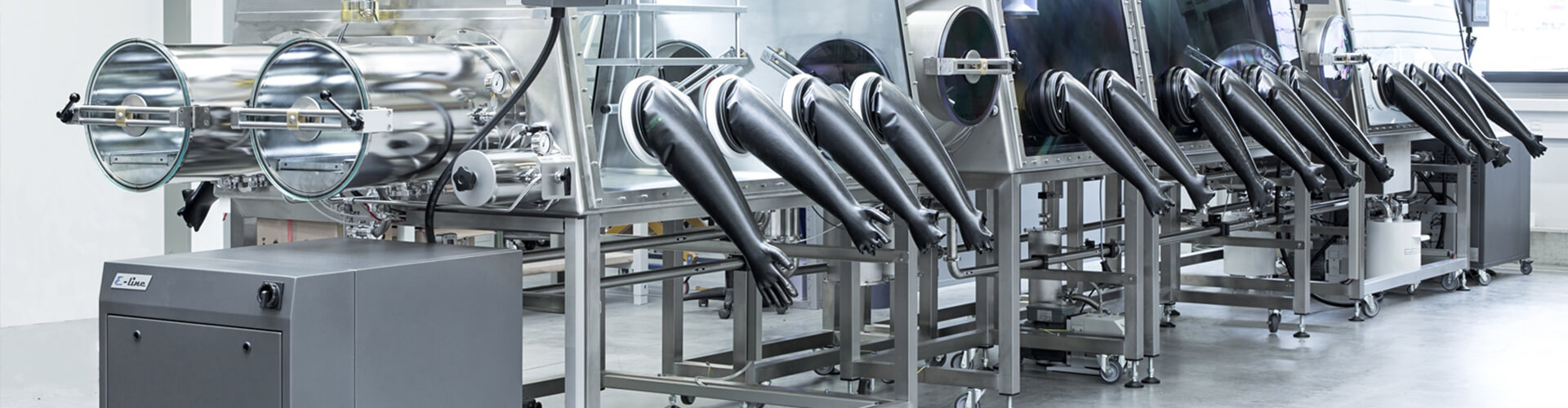
In the lithium-ion battery manufacturing process, electrode cutting is one of the most critical steps in the front-end stage, directly determining cell consistency, safety, and final product yield. Battery slitting machines are specialized roll-to-roll precision processing equipment designed to cut wide-format coated positive and negative electrode foils into narrow strips that meet various cell specifications. Fundamentally different from conventional industrial slitting machines, these devices are specifically engineered for ultra-thin copper and aluminum foils as well as coated electrodes, effectively addressing common production challenges such as burrs, material stretching deformation, and uneven tension. In high-standard battery manufacturing scenarios—including power batteries for new energy vehicles, consumer electronics batteries, and energy storage systems—high-precision battery slitting machines are essential core equipment ensuring product qualification rates.
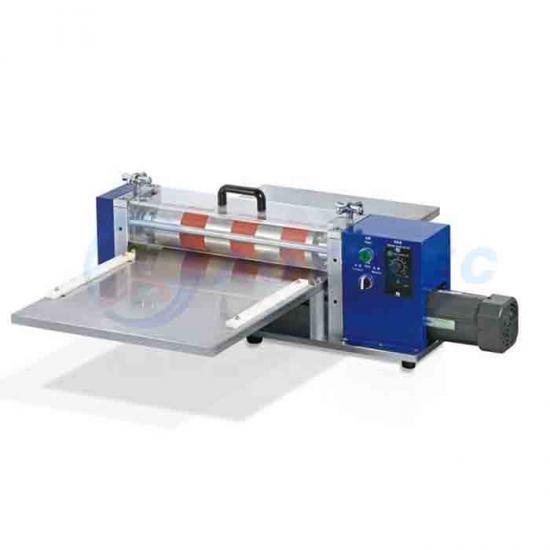
1. Core Performance and Practical Applications of Battery Slitting Machines
When describing the performance of a battery slitting machine, vague terms like "high quality" or "stable operation" are insufficient. The true advantages of the equipment must be demonstrated through long-term industrial continuous operation and extreme condition testing. On gigawatt-scale power battery production lines, the equipment can operate at full capacity continuously for 72 hours under workshop temperatures ranging from 45°C to 50°C. During sustained production, the slitting accuracy remains stably controlled within ±0.01mm, while burr height on copper and aluminum foil edges is strictly maintained below 3μm, completely eliminating potential safety hazards such as micro-short circuits and self-discharge caused by burrs during subsequent cell winding and stacking processes.
The equipment delivers differentiated application value across multiple battery production scenarios. For automotive-grade high-nickel ternary power batteries, this machine supports slitting of ultra-thin coated electrodes ranging from 5 to 100μm, equipped with real-time alignment correction and dust removal systems that effectively suppress edge chipping and coating delamination during high-speed cutting, meeting IATF16949 automotive industry quality standards. For consumer electronics batteries used in smartphones, tablets, and wearables, the machine accommodates narrow-width, small-format electrode cutting with flexible parameter switching, enabling rapid response to multi-batch, multi-model small-cell production demands. In laboratory R&D and pilot production lines, semi-automatic battery slitting models offer flexible adjustment of slitting width and tension, satisfying prototyping and validation requirements for novel battery materials and new manufacturing processes.
2. Comparative Analysis: High-Quality Battery Slitting Machine vs. Conventional Slitting Equipment
Before purchasing a battery slitting machine, customers typically conduct multidimensional comparisons. Many buyers often confuse general foil slitting equipment with dedicated battery slitting machines, only to encounter low yields and frequent breakdowns after commissioning. Below is an objective comparison to help customers quickly identify high-quality equipment and reliable suppliers.
Tension Control: Conventional slitting machines use fixed tension settings, which easily lead to foil stretching, wrinkling, and material misalignment at high speeds. Professional battery slitting machines feature magnetic powder brake-based constant-tension control systems combined with photoelectric automatic alignment, dynamically adjusting tension based on material thickness and operating speed to ensure ultra-thin copper and aluminum foils remain undistorted throughout the slitting process.
Slitting Quality: Conventional machines exhibit unstable burr control, with burr heights frequently exceeding 10μm, significantly increasing the risk of battery short circuits. High-quality battery slitting machines employ differential cutting technology paired with precision blade sets, ensuring uniform cutting force and flatness that fully meet the stringent requirements of power battery grades.
Production Stability and After-Sales Support: Low-cost conventional equipment often suffers from tool wear and parameter drift over extended operation periods, requiring frequent shutdowns for adjustments and blade replacements, severely impacting production efficiency. Standard battery slitting machines support integration with MES systems, enabling real-time monitoring of operational parameters, slitting accuracy, and equipment status, along with intelligent fault prediction. Moreover, reputable suppliers can customize calibration processes for different battery materials (such as LFP, high-nickel ternary, and LMO), whereas most conventional equipment suppliers offer only fixed-mode machines without personalized process support.
3.FAQ
Q1: Why do burrs frequently occur after electrode cutting, and how can they be resolved?
The main causes of burr formation include dull blades, unstable tension control, and improper cutting speed. High-quality battery slitting machines reduce burr issues at the source through precision blade configurations and dynamic tension adjustment. Regular blade sharpening maintenance and equipment parameter calibration based on production materials ensure long-term, consistent slitting quality.
Q2: What are the differences between fully automatic and semi-automatic battery slitting machines?
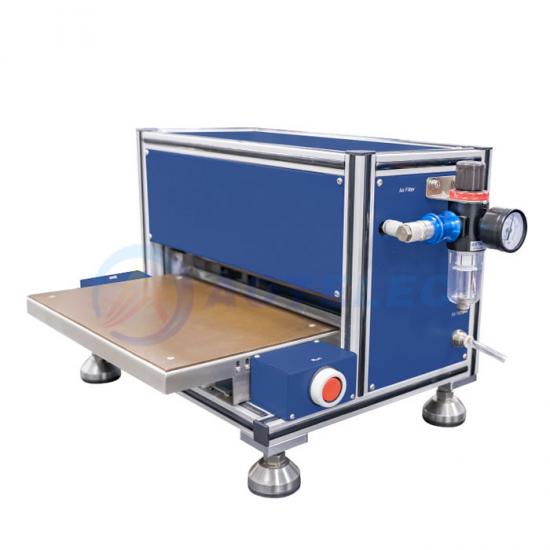
Fully automatic models are ideal for large-scale mass production in major battery factories, with a maximum operating speed of up to 50 meters per minute. They complete unrolling, slitting, scrap edge collection, dust removal, and rewinding in one integrated process, requiring minimal human intervention. Semi-automatic models offer compact and flexible designs, suitable for laboratory R&D, pilot lines, and small-batch custom production, offering lower purchase costs and simple operation and maintenance.
Q3: How long is the typical service life of a professional battery slitting machine?
Under proper daily maintenance, high-quality equipment can maintain stable performance for over eight years, particularly regarding core blade sets and mechanical structure. Regular on-site calibration and blade maintenance services help prevent accuracy degradation, minimize equipment failures, and sustain consistent slitting precision over time.
As a key precision device in the front-end process of lithium battery manufacturing, the accuracy, stability, and material adaptability of battery slitting machines directly determine the core quality of finished batteries. Compared to general-purpose slitting equipment, battery-specific slitting machines offer significant advantages in extreme operating conditions, precision control, material compatibility, and integration with intelligent production lines. For battery manufacturers, investing in high-quality slitting equipment effectively reduces production defect rates, improves product yield, and ensures stable returns for long-term, large-scale manufacturing.

Tel/Whatsapp: +8619906035385

Friend link :
AOT BATTERY IPv6 network supported
Scan to wechat: