


-
Call Us
+8619906035385 -
Email us
ping@aotbattery.com
Call Us
+8619906035385Email us
ping@aotbattery.com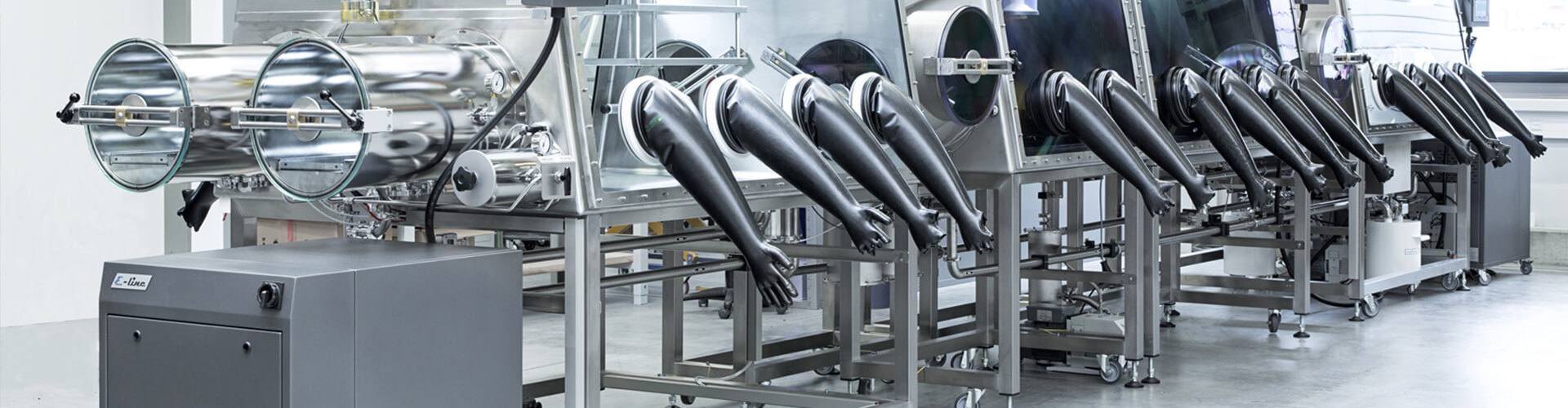
Sodium-ion batteries (SIBs) have emerged as a compelling alternative to lithium-ion batteries for grid-scale energy storage, low-speed transportation and stationary backup systems, driven by the abundant geological reserve of sodium and the similar electrochemistry between sodium and lithium. Among all battery components, the electrolyte serves as the ionic transport medium and determines the electrochemical stability window, interfacial chemistry, rate capability and safety boundary of the full cell. Sodium perchlorate (NaClO₄) is one of the most widely adopted conducting salts in academic sodium battery research, thanks to its high solubility, high thermal stability, low raw material cost and well-understood solvation behaviour in carbonate, ether and aqueous solvent systemsPMC. While NaClO₄ rarely enters mass commercial production due to intrinsic safety hazards related to the oxidizing perchlorate anion, it remains a benchmark salt for screening new electrode materials, testing electrolyte additives and exploring sodium metal cell chemistries in laboratory environments.
The core function of NaClO₄ in sodium battery electrolytes is to provide free Na⁺ carriers after dissociation. Compared with other common sodium salts including NaPF₆, NaTFSI and NaBF₄, NaClO₄ shows superior thermal stability; thermogravimetric tests record its decomposition temperature above 470 °C, far higher than most fluorinated sodium salts, which reduces the risk of thermal runaway triggered by salt decomposition under moderate overheating conditionsACS Public.... The ClO₄⁻ anion is weakly coordinating, which means it does not strongly compete with solvent molecules for the primary solvation shell of Na⁺. This characteristic helps maintain high ionic conductivity in properly formulated carbonate electrolytes such as propylene carbonate (PC), ethylene carbonate (EC) and dimethyl carbonate (DMC). Typical laboratory formulations adopt salt concentrations ranging from 0.8 M to 1.2 M in binary or ternary carbonate mixtures, delivering room-temperature ionic conductivity between 6 and 12 mS cm⁻¹, which satisfies the requirement for coin-cell and small pouch-cell evaluationFrontiers. NaClO₄ also exhibits good compatibility with mainstream SIB cathode families, including layered oxide cathodes, polyanionic phosphates and Prussian blue analogues, and it has been widely used in the early validation of P2-type oxide electrodes since the pioneering work of Delmas and co-workers.
The preparation and handling workflow of NaClO₄ electrolyte demands strict moisture control, because NaClO₄ is highly hygroscopic. Even trace water will introduce proton impurities, accelerate solvent hydrolysis and disrupt the solid-electrolyte interphase (SEI) formed on hard carbon or sodium metal anodes. Standard preparation is carried out inside an argon-filled glove box with H₂O and O₂ content kept below 0.1 ppm. Before dissolution, as-received NaClO₄ powder must be fully dried under vacuum at 120–140 °C for 12–24 hours to remove crystal water and adsorbed moisture. After cooling down inside the anoxic glove box, the dried salt is slowly added into pre-dried solvents under magnetic stirring. The stirring process usually lasts 4–8 hours until all solid powder dissolves completely. Optional film-forming additives such as fluoroethylene carbonate (FEC) or vinylene carbonate (VC) can be introduced to modify the SEI structure, suppress continuous solvent reduction and improve Coulombic efficiency during cyclingACS Public.... For high-concentration “water-in-salt” aqueous electrolytes, NaClO₄ can be dissolved at molality higher than 15 mol kg⁻¹, which suppresses water electrolysis and widens the stable voltage window of aqueous sodium cells, opening a low-cost route for non-flammable sodium storage systems.
Despite its attractive electrochemical merits, NaClO₄-based electrolytes carry notable drawbacks that block industrial adoption. The perchlorate anion is a strong oxidizer, classified as a Class 5.1 hazardous substance. When mixed with organic solvents, carbon powder or organic binders under thermal shock or short-circuit conditions, ClO₄⁻ can trigger violent oxidation reactions and combustion, which imposes rigorous logistics and waste disposal requirements for manufacturing plants. Another inherent issue is ion pairing. The electrostatic attraction between Na⁺ and ClO₄⁻ readily forms contact ion pairs (CIPs) and ion aggregates, reducing the concentration of mobile free Na⁺. This phenomenon becomes more severe at low temperature or in low-dielectric ether solvents, deteriorating rate performance and increasing cell polarizationACS Public.... In addition, NaClO₄ cannot form a robust, fluorine-rich SEI layer like NaPF₆ or NaFSI; the native interphase generated from ClO₄⁻ reduction contains sodium oxide and chlorinated by-products with high resistance, which gradually grows and degrades long-cycle stability, especially on sodium metal anodes.
Recent research efforts aim to retain the advantages of NaClO₄ while mitigating its weaknesses. One strategy is solvation structure regulation by cosolvent selection and additive engineering. Weakly solvating ethers, nitrile solvents and phosphonate diluents are tested to redistribute ion association and build a more stable interphase without fluorine-containing saltsPMC. High-concentration and localized high-concentration electrolyte designs reduce free solvent activity and restrain parasitic reactions. Solid and quasi-solid systems using NaClO₄-succinonitrile eutectic compositions combine the high ionic conductivity of liquid salt systems with reduced leakage risk.
In summary, NaClO₄ electrolyte occupies a unique position in sodium-ion battery research. Its low cost, high solubility, excellent thermal stability and broad compatibility with diverse electrode materials make it an irreplaceable benchmark electrolyte for laboratory screening. Researchers can reliably use NaClO₄ formulations to evaluate cathode/anode reversibility, rate performance and interphase evolution. Still, the strong oxidizing nature of ClO₄⁻, hygroscopic handling difficulty and ion-pairing behaviour set clear boundaries for its practical deployment. As the sodium battery industry moves toward large-scale manufacturing, fluorinated sodium salts with milder oxidizing properties and superior SEI-forming ability are gradually replacing NaClO₄ in commercial development. Future work on NaClO₄ chemistry will more likely focus on aqueous high-concentration electrolytes and solid-state eutectic electrolytes, where the low-cost and high-stability features of sodium perchlorate can be exploited under carefully controlled safety frameworks.
FAQ
Q1:How long do you need to prepare my goods?
A: 3-5 days for battery materials. 5-25 days for equipment (based on different model and quantities).
Q2:Can we have our logo or company name to be printed on products or package?
A: Sure. your logo could be printed on your products by hot stamping, printing, embossing, UV coating, silk-screen printing or sticker. In order to explore the market better and provide more convenient services to global customers, we sincerely invite overseas agent to create bright future together.
Q3:How can I install and operate the machine by myself?
A: Our system R&D based on integrated development view. when you get the machine, just need to connect it with the electrical power, then machine can be working. because the English software were installed in this machine. what you need to do is only learning the software usage, and the complete English user manual will be coning to you with the machine.
Q4:How to get technical support after purchasing?
A: Our factory provide online technical support in English , you can easy catch us online by Skype, Wechat, and Email, if you need any remote assistant support, then we will support you though Team Viewer

Tel/Whatsapp: +8619906035385

Friend link :
AOT BATTERY IPv6 network supported
Scan to wechat: