Battery Glove Box: Working Principle, Applications and Buying Guide
Sep 10,2026
In the entire process of lithium battery research and development, sample assembly, and mass production, water and oxygen impurities are critical factors affecting battery performance, lifespan, and safety. Both positive and negative electrode materials and electrolytes in lithium batteries are highly sensitive to moisture and oxygen; once exposed to air, they are prone to oxidation and hygroscopic degradation, directly leading to increased internal resistance, shortened cycle life, swelling, leakage, and even short circuits or fires.
1. What is a Battery Glove Box
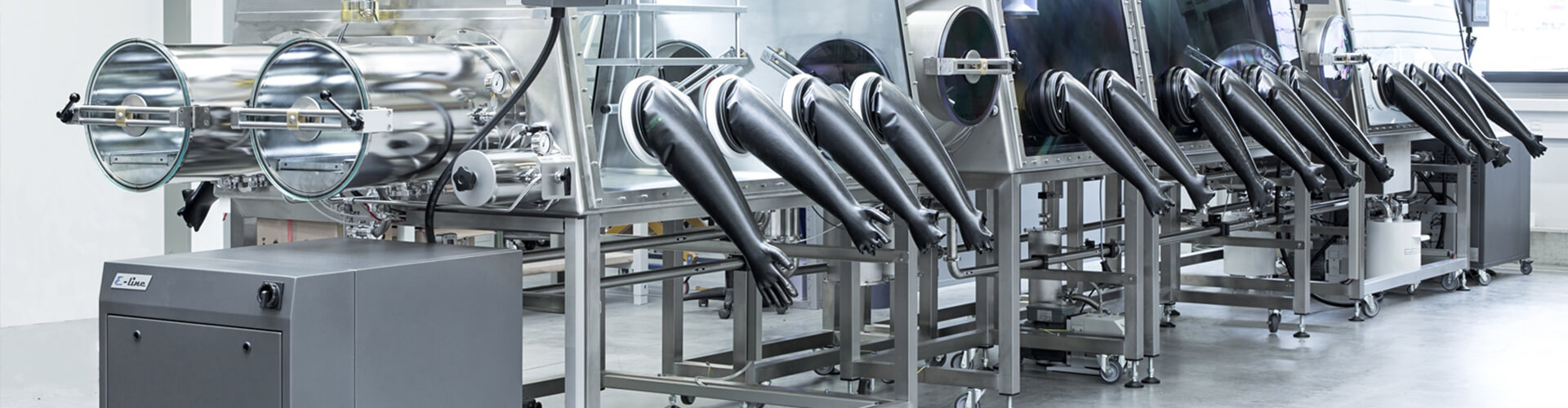
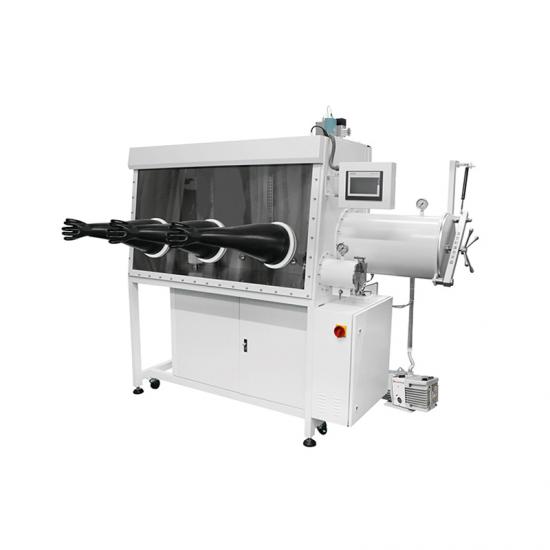
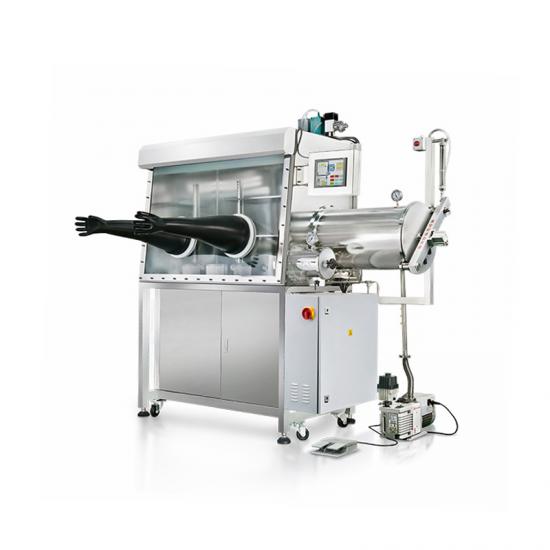
A Battery Glove Box is a specialized water- and oxygen-free glove box designed specifically for lithium battery applications. It is a sealed inert gas operating system developed exclusively for the lithium battery industry, differing significantly from general-purpose laboratory glove boxes. Utilizing high-purity argon, nitrogen, and other inert gases as the working medium, the equipment features an automatic circulation purification system, airtight sealing structure, and precise sensing and monitoring systems. It completely isolates the internal operational environment from external air, continuously establishing and maintaining an ultra-low moisture and oxygen, dust-free inert atmosphere. This precision non-standard equipment is dedicated to lithium battery material experiments, cell fabrication, and battery testing, widely applicable in academic institutions, new energy manufacturing plants, and lithium battery testing laboratories.
2. Core Functions of Battery Glove Boxes
The primary function of a battery glove box is to completely eliminate contamination from water and oxygen, ensuring the accuracy and safety of lithium battery materials and cells, thereby addressing key challenges at the source in lithium battery production and R&D. First, it can stably maintain internal water and oxygen levels below 0.1 ppm, preventing oxidation of electrode materials and hydrolysis of electrolytes, effectively improving the yield rate of finished lithium batteries and extending their cycle life. Second, the enclosed inert gas environment minimizes the risk of fire or explosion caused by contact between flammable, explosive electrolytes and lithium powder with air, greatly enhancing safety during both experimental and mass production operations. Finally, the standardized, dust-free, sealed workspace prevents particulates and contaminants from entering the cell packaging process, reducing quality issues such as short circuits and excessive self-discharge, ensuring reproducibility, accuracy of experimental data, and consistent product quality across batches. It is thus an essential core device for advanced lithium battery R&D and large-scale manufacturing.
3. Key Application Scenarios: Precise Fit Across the Entire Lithium Battery Workflow
In university and research institute settings focused on battery material development, the equipment supports continuous 72-hour purification cycles, maintaining internal oxygen and moisture levels consistently below 0.1 ppm. This precisely meets the requirements for synthesis, grinding, and formulation experiments involving novel lithium battery materials such as ternary compounds, lithium iron phosphate, and solid-state electrolytes. Even when frequently opening the transfer chamber to retrieve or place samples, the system restores environmental conditions within three minutes, preventing trace moisture and oxygen ingress that could compromise experimental data, thus ensuring repeatability and accuracy in scientific research.
In small-to-medium-sized battery factories engaged in cell assembly and mass production, the equipment is equipped with corrosion-resistant nitrile gloves specifically designed to withstand exposure to lithium battery electrolytes and organic solvents, ensuring long-term durability without aging or damage. The box’s temperature control system mitigates the impact of workshop temperature fluctuations, eliminating thermal stress deformation during cell packaging and effectively reducing defect rates in mass-produced batteries. For advanced processes such as in-situ encapsulation of solid-state batteries and precision laser welding, the equipment integrates vision positioning and pressure regulation modules, enabling precise control over operational accuracy and helping extend battery cycle life beyond 2,000 cycles.
4. Product Comparison Analysis: Key Differences Between High-Quality Battery Glove Boxes and Standard Glove Boxes
Customers often confuse general-purpose glove boxes with battery-specific models. Although they may appear similar in appearance, there are significant differences in core performance, compatibility, and service life—factors that contribute to high equipment failure rates and elevated maintenance costs for many enterprises. Below is an objective comparison based on key dimensions to help customers accurately identify reliable suppliers and trustworthy equipment.
First, differences in purification systems and stability. Standard general-purpose gloveboxes typically use simple recirculation purification with manual valve control and lower-grade adsorbent materials, resulting in significant degradation of purification efficiency over time. After operating for 1–2 months, water and oxygen levels often surge above 5 ppm, failing to meet lithium battery production standards. In contrast, high-quality battery-specific gloveboxes are equipped with an integrated single-column PLC fully automatic purification system, using imported adsorbent materials and supporting fully automatic regeneration cycles. They require no frequent manual calibration and maintain stable water and oxygen levels below 0.1 ppm even during long-term continuous operation, making them ideal for industrial-scale, high-intensity production.
Second, sensor configuration differences. Standard gloveboxes commonly employ disposable fuel cell sensors that are vulnerable to air exposure and electrolyte corrosion, easily contaminated and degraded in the organic solvent environment of lithium batteries, leading to short service life and large measurement deviations. Professional battery gloveboxes, however, feature zirconia solid-state electrolyte oxygen sensors and washable, reusable moisture sensors specifically designed for lithium battery environments. These sensors resist contamination and wear, delivering precise and stable measurements, extending equipment lifespan by more than threefold.
Third, operational compatibility differences. Standard gloveboxes are suitable only for basic laboratory operations and cannot withstand electrolyte corrosion or frequent sample handling. Battery-specific models are optimized for the lithium battery industry, featuring multiple KF-standard interfaces on the chamber body to connect with vacuum ovens, filling machines, testing equipment, and other ancillary systems, enabling streamlined, pipeline-style operations. The sealing structure is also reinforced, offering superior pressure relief and leak prevention, significantly reducing safety risks.
5. FAQ
(1)Why do readings fluctuate during operation of a battery glovebox?
In most cases, this is not due to equipment failure but rather improper model selection or incorrect operation. Standard gloveboxes cannot withstand the corrosive environment of lithium battery electrolytes, causing sensor contamination and failure. Additionally, rapid transition chamber operations, aging seals, and delayed regeneration of the purification system can all lead to unstable water and oxygen levels. Dedicated battery gloveboxes come with intelligent monitoring systems that provide real-time anomaly alerts and fully automatic regeneration modes requiring no manual intervention, fundamentally resolving instability issues.
(2)How often does a battery glovebox require maintenance? Is operation and maintenance costly?
High-quality fully automatic battery gloveboxes require minimal maintenance. The purification system regenerates automatically, eliminating the need for frequent replacement of adsorbent materials. Maintenance is limited to checking seal integrity and glove wear every six months. Compared to standard manual models, annual maintenance costs can be reduced by 60%, significantly lowering labor and consumable expenses.
(3)Should research labs choose single-station or dual-station gloveboxes?
For academic research and small-batch sample processing, single-station units are preferable due to their compact footprint, high cost-effectiveness, and flexible operation. For factory-scale mass production and high-frequency assembly lines, dual-station gloveboxes are recommended—enabling two operators to work simultaneously, doubling productivity and meeting the demands of large-scale cell manufacturing.
(4)Can gloveboxes support solid-state battery fabrication processes?
Professional battery gloveboxes are fully compatible with advanced solid-state battery processes such as in-situ encapsulation, material preparation, and precision assembly. They can integrate with temperature-controlled platforms, vision positioning systems, and pressure-regulated modules to eliminate thermal stress during operations, reduce interfacial resistance, and significantly improve the performance of finished solid-state batteries.
The core value of a battery glovebox lies not merely in its basic sealed operation functionality, but in its ability to deliver long-term, ultra-low water and oxygen environments, specialized adaptation to lithium battery conditions, low maintenance costs, and high operational safety. In today's era of refined development in the lithium battery industry, standard general-purpose glove boxes can no longer meet the demands of high-quality battery research and production. Only specialized equipment tailored to industry-specific applications can improve battery yield from the source, extend product lifespan, reduce trial-and-error costs for enterprises and research institutions, and enhance core competitiveness.





 IPv6 network supported