


-
Call Us
+8619906035385 -
Email us
ping@aotbattery.com
Call Us
+8619906035385Email us
ping@aotbattery.com
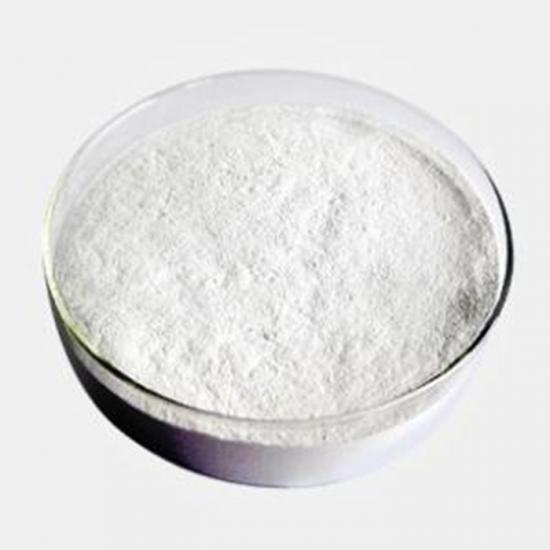
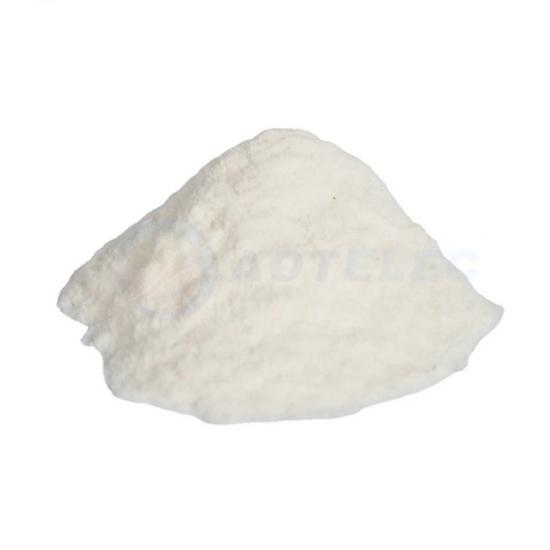
Lithium tetrafluoroborate (LiBF₄) powder is a core lithium salt material widely adopted in lithium-ion battery electrolyte systems. Structurally, it consists of lithium ions (Li⁺) and tetrafluoroborate anions (BF₄⁻), featuring excellent chemical stability and superior ionic conductivity. As a critical electrolyte functional material, LiBF₄ powder effectively optimizes electrolyte comprehensive performance, boosts battery charge-discharge efficiency, and improves the overall service performance of lithium-ion batteries. It maintains stable physical and chemical properties under extreme high-temperature and high-pressure working conditions, making it one of the most mainstream and practical electrolyte lithium salts in the current lithium battery industry.
LiBF₄ powder possesses outstanding thermal stability and chemical inertness. It resists thermal decomposition at high temperatures and can maintain complete molecular structure and stable functional properties in environments above 200℃. In terms of chemical stability, it hardly reacts with environmental moisture to produce corrosive gases, and no toxic decomposition substances are generated during daily use and high-temperature operation, ensuring high safety in battery application scenarios.
The material exhibits excellent lithium ion conduction capability, which can accelerate the rapid migration and diffusion of Li⁺ in the electrolyte, thereby significantly improving the charge and discharge response speed and efficiency of lithium-ion batteries. Although its intrinsic conductivity is slightly lower than that of lithium hexafluorophosphate (LiPF₆), LiBF₄ delivers more stable and reliable conductivity in high-humidity environments and special solvent systems. It effectively avoids electrolyte performance attenuation caused by moisture invasion and impurity interference, improving the environmental adaptability of batteries.
LiBF₄ is a mild Lewis acid with moderate acidic activity, which can be applied as a functional reagent in various organic synthesis reactions, providing stable acidic catalytic conditions for reaction progression.
At present, the industrial and laboratory preparation of LiBF₄ powder mainly adopts five mature processes, with distinct advantages, limitations and applicable scenarios for each method, as detailed below:
Process Flow: Dry lithium fluoride (LiF) powder is placed in a sealed reactor, and dry boron trifluoride (BF₃) gas is introduced for reaction under high temperature (150–300℃) or high-pressure conditions.
Advantages: The process is simple and solvent-free, effectively avoiding solvent impurity residue; the obtained product has high purity (up to 99% and above) and stable quality.
Disadvantages: BF₃ gas is highly corrosive and toxic, requiring strict equipment sealing and professional safety operation specifications; unreacted LiF is easily encapsulated by generated products, leading to incomplete reaction and reduced raw material utilization.
Application Scenarios: Laboratory small-scale preparation and high-purity LiBF₄ production for high-end electrolyte manufacturing.
Process Flow: Lithium raw materials such as lithium carbonate and lithium hydroxide are slowly added into fluoroboric acid (HBF₄) aqueous solution. The mixed solution is adjusted to neutral or weakly acidic pH, by stirring reaction, filtration, evaporation concentration, cooling crystallization, and high-temperature drying and dehydration to obtain the final product.
Advantages: The reaction conditions are mild, raw materials are widely available and low-cost, and the process is suitable for large-scale continuous industrial production.
Disadvantages: The product is prone to carrying crystal water, which requires high-temperature drying treatment above 200℃; the drying process consumes high energy and may cause partial product decomposition, and trace impurities are easily residual in the aqueous phase reaction system.
Application Scenarios: Mass production of industrial-grade LiBF₄ for ordinary lithium battery electrolyte preparation.
Process Flow: LiF powder is uniformly dispersed in anhydrous organic solvents (including ether, carbonate, anhydrous hydrofluoric acid, etc.). BF₃ gas is introduced or HBF₄ organic solution is dropwise added for reaction. After the reaction is completed, high-purity LiBF₄ powder is obtained via filtration and drying.
Advantages: The whole process avoids water interference, the product has extremely low water content and high purity (up to 99.5% and above), and the reaction rate is fast with high production efficiency.
Disadvantages: The organic solvents and raw materials used are highly corrosive and toxic, putting forward high requirements for operation technology and equipment corrosion resistance; solvent recovery is difficult with high comprehensive production cost, and new impurities may be introduced in the solvent cycle process.
Application Scenarios: Preparation of ultra-high-purity LiBF₄ for solid-state battery electrolyte and high-precision electronic materials.
Process Flow: Aqueous solutions of soluble lithium salts (such as lithium chloride) and tetrafluoroborate (sodium tetrafluoroborate, potassium tetrafluoroborate, etc.) are mixed to trigger double decomposition reaction, generating LiBF₄ precipitate. The finished product is obtained after filtering, washing and drying the precipitate.
Advantages: The reaction conditions are mild, the operation process is simple and easy to control, suitable for rapid small-batch preparation.
Disadvantages: The product precipitate is easy to adsorb impurity ions such as Na⁺ and Cl⁻, requiring multiple times of washing to ensure purity; the production yield is low, which cannot meet large-scale industrial production demands.
Application Scenarios: Laboratory small-scale sample preparation and chemical teaching demonstration experiments.
Process Flow: The solution containing BF₄⁻ anions passes through a lithium-type ion exchange resin column (sulfonic acid cation exchange resin). Li⁺ in the resin combines with BF₄⁻ in the solution, and high-purity LiBF₄ powder is finally prepared through evaporation concentration, crystallization and drying.
Advantages: It can efficiently separate and remove trace impurities in the system, the product purity is extremely high, and the whole process is easy to realize automatic control with stable product quality.
Disadvantages: The price of ion exchange resin is high, and regular regeneration or replacement is required, resulting in high operating cost; the single-time treatment capacity is limited, only suitable for small-scale refined production.
Application Scenarios: Refined preparation of electronic-grade high-purity LiBF₄ fine chemicals.
LiBF₄ powder has significant hygroscopicity, which is prone to deliquescence and performance deterioration after absorbing moisture in the air. For storage, it shall be placed in a dry, cool and well-ventilated warehouse, far away from fire sources, high-temperature heat sources and oxidizing substances. The product container must be kept tightly sealed at all times to isolate air moisture. Meanwhile, the storage area shall be equipped with complete fire-fighting facilities and leakage emergency disposal equipment to ensure storage safety.
LiBF₄ is an indispensable core electrolyte material for lithium-ion batteries. As an efficient electrolyte additive and main lithium salt, it can optimize the electrode-electrolyte interface film structure, reduce battery charge transfer impedance, and effectively improve the cycle stability and comprehensive service life of batteries. In addition, it can form a stable solvation structure with lithium ions, enhance the electrolyte’s electrode film-forming performance, and effectively inhibit aluminum foil corrosion inside batteries. Compared with LiPF₆, LiBF₄ exhibits more excellent low-temperature discharge performance, and is the key raw material for preparing long-life and low-temperature resistant lithium-ion batteries, widely used in special equipment batteries and new energy vehicle low-temperature battery systems.
Benefiting from its mild and stable Lewis acidity, LiBF₄ serves as a high-efficiency catalyst in various organic synthesis reactions including esterification, alkylation and condensation reactions. It is not easy to decompose during the catalytic process, with stable catalytic activity, which can significantly improve reaction efficiency and product yield, and reduce side reactions.
The global LiBF₄ industry maintains a steady growth trend driven by the rapid development of new energy lithium battery industry. In 2024, the global total output of lithium tetrafluoroborate powder reached approximately 32,000 tons, a year-on-year increase of 16.8%. It is predicted that the global LiBF₄ market size will grow to 1.86 billion US dollars in 2025, with a year-on-year growth rate of 17.7%.
China occupies a core position in the global LiBF₄ production and market. It is expected that China’s LiBF₄ market share will rise to 65% in 2025, with the domestic output reaching 24,000 tons. In the future, with the continuous breakthrough and gradual industrial maturity of solid-state battery technology, the application advantages of high-purity LiBF₄ in solid electrolyte systems will be further highlighted, and its market application scope and industry scale will achieve further expansion.
FAQ
Q1:How long do you need to prepare my goods?
A: 3-5 days for battery materials. 5-25 days for equipment (based on different model and quantities).
Q2:Can we have our logo or company name to be printed on products or package?
A: Sure. your logo could be printed on your products by hot stamping, printing, embossing, UV coating, silk-screen printing or sticker. In order to explore the market better and provide more convenient services to global customers, we sincerely invite overseas agent to create bright future together.
Q3:How can I install and operate the machine by myself?
A: Our system R&D based on integrated development view. when you get the machine, just need to connect it with the electrical power, then machine can be working. because the English software were installed in this machine. what you need to do is only learning the software usage, and the complete English user manual will be coning to you with the machine.
Q4:How to get technical support after purchasing?
A: Our factory provide online technical support in English , you can easy catch us online by Skype, Wechat, and Email, if you need any remote assistant support, then we will support you though Team Viewer.

Tel/Whatsapp: +8619906035385

Friend link :
AOT BATTERY IPv6 network supported
Scan to wechat: