


-
Call Us
+8619906035385 -
Email us
ping@aotbattery.com
Call Us
+8619906035385Email us
ping@aotbattery.com
The global new energy industry is expanding at a rapid pace, with surging demand for power batteries, energy storage systems and 3C consumer electronics lithium-ion batteries. As the core energy storage carrier, lithium-ion batteries’ safety, cycle life and fast-charging performance have become the focal point of competition across the industrial chain. As a core inner material that separates positive and negative electrodes and guarantees ion conduction, separators directly determine batteries’ safety threshold and electrochemical performance. At present, the mainstream separators in the market fall into two major technical routes: polyethylene (PE) wet-process separators and polypropylene (PP) dry-process separators, which feature distinct differentiation in material properties, manufacturing processes and applicable scenarios. With the continuous improvement of cell energy density, single-layer PE wet-process separators featuring excellent low-temperature resistance, high mechanical strength and precise thermal shutdown performance have become the mainstream choice for mid-range power batteries, consumer lithium batteries and light-duty energy storage systems. Mass standardized production and delivery of high-performance single-layer PE separators have provided the lithium battery industrial chain with highly stable and cost-effective basic material solutions.
The global lithium battery separator market has maintained steady growth in recent years. Global separator shipments exceeded 30 billion square meters in 2025. Thanks to controllable thickness, uniform pores and balanced bidirectional mechanical properties, wet-process PE separators account for more than 60% of the overall market share. The localization rate of domestic wet-process separators keeps rising, and local enterprises have gradually seized core positions in the global supply chain through process optimization and cost control. Nevertheless, the industry faces prominent structural contradictions: low-end homogeneous production capacity is in surplus while high-end high-performance separators are in short supply. Downstream battery manufacturers have raised stricter requirements for separators in terms of thermal stability, puncture resistance, dimensional consistency, air permeability and porosity matching, forcing upstream separator manufacturers to delve into material formulations and biaxial stretching wet processes to develop standardized single-layer PE separators with fully qualified performance indicators.
PE and PP, the two polyolefin materials, have inherent property differences that underpin the two technical routes. In terms of intrinsic material characteristics, PP boasts superior high-temperature resistance with a higher melting point and cell closure temperature, making it more suitable for high-temperature energy storage scenarios. However, PP material is relatively brittle and suffers obvious degradation of mechanical properties at low temperatures. In contrast, PE features outstanding low-temperature tolerance and excellent film toughness that resists cracking after biaxial stretching, with well-balanced mechanical properties in both directions. Its only drawback is higher sensitivity to environmental stress, which requires precise wet-process manufacturing to control internal stress and avoid film deformation defects. In terms of density, PP has a lower density than PE, granting it a slight lightweight advantage at the same thickness. Yet wet-process PE offsets this gap via ultra-thin design, with three optional thickness specifications (16μm, 20μm and 25μm) covering all types of cell designs with different capacities and rate requirements.
The unique thermal shutdown protection mechanism of PE separators constitutes the core reason for the large-scale commercial adoption of wet-process PE separators. Industry-leading standardized single-layer PE separators feature a film closure temperature of ≤135°C and a film rupture temperature of ≥147°C, forming a distinct safety buffer zone. When the internal temperature of a battery abnormally rises to 135°C, the micropores of the PE separator melt and close rapidly to block lithium ion transport and terminate electrochemical reactions, fundamentally restraining thermal runaway. The separator film will only break when the temperature climbs above 147°C. This dual temperature threshold establishes a complete thermal protection barrier, fully complying with safety design specifications for passenger vehicle power batteries and digital lithium batteries, and meeting the safety test standards of mainstream vehicle and battery manufacturers.
Mechanical performance is critical for separators to resist punctures caused by lithium dendrites and metal burrs. Benchmark single-layer PE separators maintain a puncture strength of over 300g, far exceeding basic national standard thresholds, which effectively prevents internal short circuits triggered by lithium dendrite growth during charge and discharge cycles. The tensile strength is optimized for balanced bidirectional performance: the machine direction (MD) tensile strength exceeds 90MPa, while the transverse direction (TD) tensile strength surpasses 100MPa. This stands out from uniaxially stretched dry-process PP separators that are prone to transverse tearing. The superior bidirectional high strength prevents stretching deformation and breakage of separators during cell winding and lamination processes, significantly boosting cell yield and reducing production scrap costs. Air permeability is controlled within the range of 350–650 Sec/100ml, and porosity is stably maintained at 38%–44% with evenly distributed pores. The films deliver excellent electrolyte wettability, balancing ion conduction speed and battery self-discharge control, and support the development of fast-charging and long-cycle-life cells.
Thermal shrinkage directly governs the dimensional stability of separators under high-temperature conditions and serves as a core assessment indicator for cell certification by vehicle manufacturers. This series of single-layer PE separators achieves multi-gradient thermal shrinkage control: under normal operating temperature of 90°C, MD thermal shrinkage is ≤3.5% and TD thermal shrinkage ≤2%; at moderate high temperature of 105°C, MD shrinkage is controlled within 5% and TD shrinkage within 3%; under short-term extreme high temperature of 120°C, MD shrinkage is ≤20% and TD shrinkage ≤15%. The progressive multi-gradient shrinkage indicators simulate multiple working conditions including continuous battery discharge, heat generation during fast charging and thermal abuse. They ensure separators will not shrink drastically to expose electrodes under temperature rises, greatly lowering the risk of thermal runaway and fire, and adapting to harsh operating environments such as high-temperature vehicle use in southern regions and outdoor energy storage equipment.
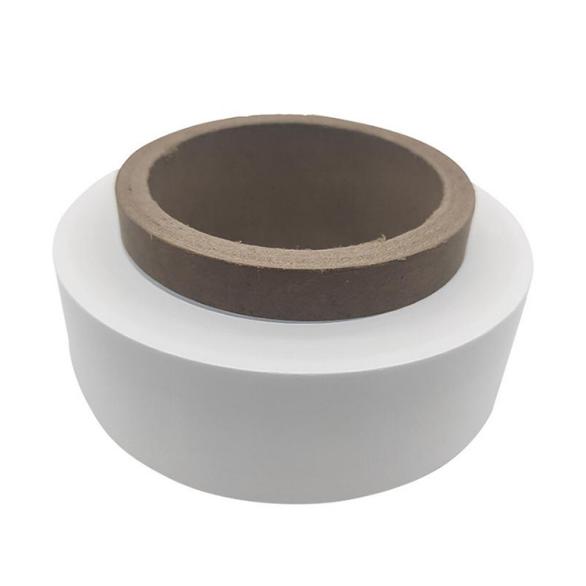
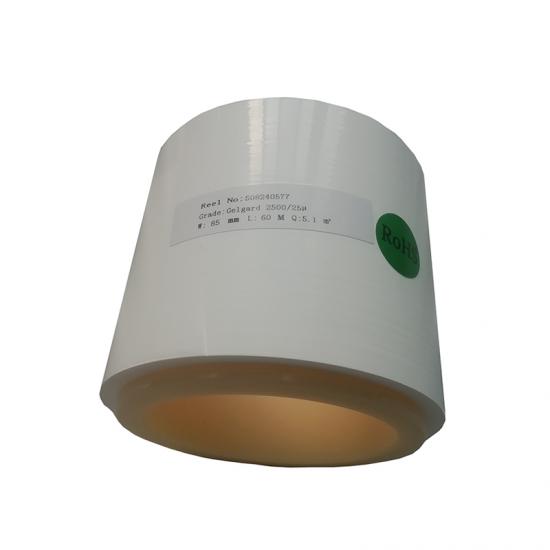
In terms of product specifications, single-layer PE separators are available in three mainstream thicknesses (16μm, 20μm and 25μm) with a uniform ivory-white appearance, compatible with all types of lithium-ion batteries including prismatic, cylindrical and pouch cells. The thin 16μm variant targets high-energy-density 3C digital batteries and small two-wheeler power batteries, increasing active material loading within limited cell space. The standard 20μm thickness fits most passenger vehicle power batteries, striking a balance between energy density and safety margin. The 25μm thick variant is mainly applied to household energy storage and low-speed electric vehicle batteries for enhanced mechanical protection. Standardized multi-thickness products support flexible mass production with quick production line switching to rapidly respond to customized orders from downstream battery manufacturers, balancing mass production costs and adaptability to segmented application scenarios.
From a long-term industrial development perspective, single-layer wet-process PE separators will remain irreplaceable in the short run. Although multi-layer composite and ceramic-coated separators represent the upgrade direction for high-end power batteries, single-layer PE separators hold a solid market share in mid-range lithium battery markets thanks to lower raw material costs, mature and stable manufacturing processes and excellent low-temperature toughness. The industry is phasing out low-end separators with substandard indicators, out-of-control thermal shrinkage and insufficient puncture strength as downstream battery procurement thresholds keep rising. Standardized single-layer PE separators with a complete performance indicator system and stable batch consistency will continue to expand market share.
In terms of technological research and development, industrial chain enterprises are advancing two major optimization directions simultaneously. First, ultra-thinning technology for wet-process PE separators is being iterated to break through specifications below 12μm, catering to cells with higher energy density. Second, modified PE formulations are under development to adjust environmental stress sensitivity via polymer additives, further improving high-temperature thermal stability and narrowing the gap with PP separators in heat resistance, combining PE’s low-temperature toughness and PP’s heat resistance advantages. Meanwhile, intelligent production lines are widely deployed with full-coverage real-time online detection systems for thickness, air permeability and thermal shrinkage, enabling closed-loop full-process quality control of separators and drastically reducing performance fluctuations between batches to continuously improve product reliability.
From an industrial layout perspective, three major demand drivers fuel sustained growth in the separator market: rising penetration of new energy vehicles, year-on-year doubling of new energy storage installed capacity, and booming demand for emerging consumer lithium batteries such as portable and outdoor power stations. Relying on a complete chemical and lithium battery supporting system, domestic lithium battery separator industrial chains have formed the world’s largest production cluster for wet-process PE separators. Local products enjoy remarkable advantages over overseas brands in cost performance, delivery cycles and customized services. Exports of single-layer PE separators grow year by year, shipped to lithium battery manufacturing bases across Southeast Asia, Europe and North America, deeply participating in global new energy supply chain competition.
Industry experts point out that balanced performance of separator materials will be the core competitive edge in the future. Products with outstanding single indicators but obvious shortcomings in other parameters will be gradually eliminated by the market. The newly upgraded standardized high-performance single-layer PE separators deliver balanced optimization across all key indicators including air permeability, porosity, mechanical strength, multi-gradient thermal shrinkage and thermal shutdown temperature. They address the pain point of weak thermal stability of traditional PE separators while retaining the core strengths of wet processes such as bidirectional high strength and precisely controllable pores, providing lithium battery manufacturers with safe, stable and cost-effective basic separator options.
Conclusion
High-quality development of the new energy industry relies on technological advancement of upstream key materials. As a fundamental lithium battery material, single-layer wet-process PE separators continuously adapt to diversified downstream application scenarios through process optimization, indicator upgrading and diversified specifications. Moving forward, with breakthroughs in material modification and ultra-thin wet-process technologies, PE separators will see further upgrades in safety threshold and electrochemical performance, unlocking sustained value in power batteries, energy storage and consumer electronics sectors. They will lay a solid foundational material backbone for the safe and high-energy-density development of the global lithium battery industry, empowering the new energy industry to achieve higher-quality and sustainable growth.

Tel/Whatsapp: +8619906035385

Friend link :
AOT BATTERY IPv6 network supported
Scan to wechat: