


-
Call Us
+8619906035385 -
Email us
ping@aotbattery.com
Call Us
+8619906035385Email us
ping@aotbattery.com
Sodium-ion batteries (SIBs) are regarded as a promising low-cost alternative to lithium-ion batteries for large-scale energy storage. Hard carbon (HC) is the most practical anode material for SIBs, because graphite cannot accommodate sodium ions effectively. Kuraray KURANODE™, a commercial biomass-derived hard carbon, has become a widely adopted reference material in academic and industrial SIB research. This article compares the structural features, sodium storage behaviour, electrochemical performance, advantages and limitations of Kuraray hard carbon with diverse lab-synthesized hard carbons derived from biomass, polymer precursors and synthetic carbon sources. The comparison highlights critical gaps between benchmark commercial HC and newly developed lab HC materials, and outlines future directions to bridge laboratory innovation toward industrialized sodium-ion battery anodes.
1. Introduction
Unlike graphite, hard carbon consists of randomly stacked turbostratic carbon domains with abundant closed nanopores and expanded interlayer spacing. Sodium storage follows a widely accepted adsorption-intercalation-pore-filling mechanism: sodium ions adsorb on surface defects in the sloping potential region above 0.15 V vs Na/Na⁺, while sodium intercalation and nanopore filling deliver the low-voltage plateau capacity, which dominates the usable reversible capacity.
Many research groups synthesize custom hard carbons from corn cob, lignin, phenolic resin, sucrose and agricultural waste. However, results from different laboratories are difficult to compare due to inconsistent precursor, carbonization temperature and post-treatment. Kuraray KURANODE™ Type 2 serves as a standardized benchmark, providing reproducible electrochemical data for cross-laboratory evaluation. It is produced from sustainable plant precursors via controlled high-temperature pyrolysis, and has been extensively applied in full-cell SIB research worldwide.
2. Structural Comparison
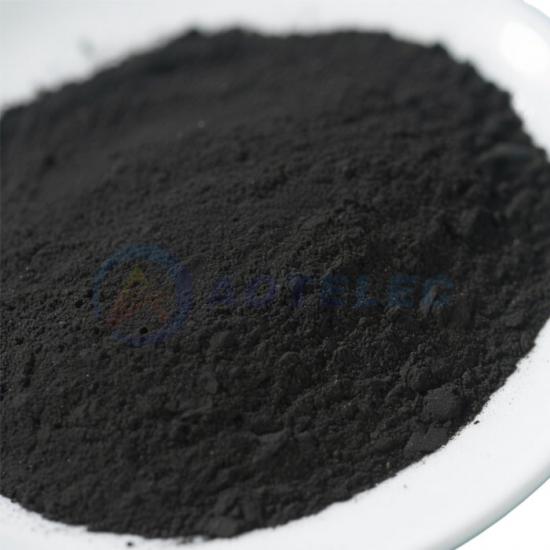
Kuraray hard carbon exhibits a typical disordered hard carbon structure with an interlayer spacing d₀₀₂ ≈ 0.38 nm, low specific surface area (4–6 m² g⁻¹), limited open pores and abundant closed internal voids. Low surface area minimizes irreversible electrolyte decomposition, which is key to high initial Coulombic efficiency (ICE). Its particle size is controllable (5 μm or 9 μm D₅₀), with uniform particle morphology and low moisture absorption, compatible with aqueous CMC/SBR electrode processing.
In contrast, most lab-made biomass hard carbons possess higher Brunauer–Emmett–Teller (BET) surface areas, often exceeding 20 m² g⁻¹. Untreated biomass precursors retain surface oxygen-containing functional groups and open pores. Although high surface area boosts rate capability by shortening ion diffusion paths, extra active sites trigger continuous solid-electrolyte interphase (SEI) formation, lowering ICE frequently below 80 %. Polymer-derived hard carbons (phenolic resin, sucrose) achieve more controllable microstructures, but often require expensive raw materials and strict atmosphere control. Template-synthesized hard carbons with engineered pore structures deliver outstanding rate performance, yet complex synthesis routes restrict scalable production.
3. Electrochemical Performance Comparison
Kuraray Type 2 hard carbon delivers a reversible capacity of ~298 mAh g⁻¹ with an ICE of approximately 90 % at 0.1 C. The well-balanced plateau capacity guarantees high energy density in full cells. It maintains stable cycling and superior low-temperature performance compared with most lab hard carbons; its disordered carbon framework enables fast sodium transport even under sub-zero conditions. These merits explain its popularity as a reference electrode material.
Numerous lab-synthesized hard carbons report competitive or even higher reversible capacities (>310 mAh g⁻¹). Heteroatom doping (nitrogen, phosphorus) introduces additional defects and sodiophilic sites, enhancing slope capacity and rate performance. Nevertheless, most modified lab HC suffer clear drawbacks. Low ICE remains the primary obstacle: irreversible sodium trapping on surface functional groups consumes sodium extracted from the cathode, severely reducing full-cell energy density. In addition, many lab materials show poor scalability. Hydrothermal pretreatment, template etching and doping procedures are difficult to scale up, and batch-to-batch microstructure inconsistency hinders commercial translation.
Rate performance presents a trade-off. Template or biomass-derived porous hard carbons show improved capacity retention at high current densities, whereas Kuraray HC performs moderately under extreme fast charging. The compact particle structure and limited open pores slow sodium ion penetration at ultrahigh rates. This indicates that porosity engineering is an effective strategy to improve the power characteristics of commercial benchmark hard carbon.
4. Advantages and Challenges of Two Material Systems
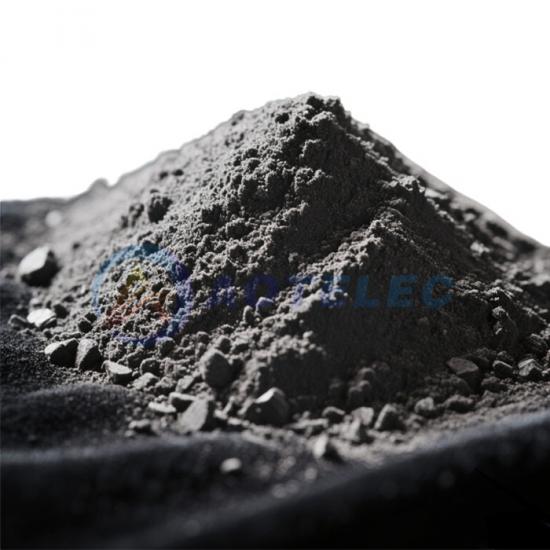
The greatest strength of Kuraray hard carbon is standardization and manufacturability. Stable microstructure, consistent electrochemical metrics and mature mass production make it ideal for benchmark testing and prototype battery fabrication. Its main limitation lies in limited room for performance tuning. Precursor and pyrolysis conditions are fixed, so researchers cannot easily modify interlayer spacing, pore distribution or surface chemistry.
Lab-synthesized hard carbons offer enormous structural tunability. Researchers can adjust carbonization temperature, perform surface coating, heteroatom doping and pore engineering to optimize plateau capacity, ICE and kinetics. However, the majority of reported materials only exhibit advantages in half-cell testing. Without scalable, low-cost synthesis routes, promising laboratory results cannot be transferred to industrial manufacturing.
Future research should combine the strengths of both directions. On one hand, surface modification and pore regulation strategies validated in lab hard carbon can be applied to commercial Kuraray-type HC to boost rate performance and plateau capacity. On the other hand, newly designed biomass hard carbons should prioritize lowering surface area and removing oxygen defects to improve ICE, narrowing the performance gap with commercial benchmark materials. Systematic side-by-side testing against Kuraray hard carbon is strongly recommended to verify the practical value of novel hard carbon anodes.
Kuraray hard carbon remains the gold-standard reference anode for sodium-ion battery research due to excellent reproducibility, high initial Coulombic efficiency and mature production technology. While laboratory-synthesized hard carbons demonstrate attractive structural diversity and tunable sodium storage properties, low ICE and scalability barriers limit practical application. Further progress toward high-performance SIB anodes requires synergistic research between controllable laboratory structural engineering and low-cost, scalable manufacturing inspired by commercial biomass hard carbon protocols.

Tel/Whatsapp: +8619906035385

Friend link :
AOT BATTERY IPv6 network supported
Scan to wechat: