


-
Call Us
+8619906035385 -
Email us
ping@aotbattery.com
Call Us
+8619906035385Email us
ping@aotbattery.com
Lithium-ion batteries (LIBs) dominate modern energy storage, powering consumer electronics, electric vehicles (EVs), and grid-scale systems. Cathode materials determine energy density, cycle life, cost, and safety, among which lithium nickel manganese cobalt oxides (LiNiₓMnᵧCo_zO₂, NMC) stand out as the most widely adopted layered oxides. The NMC cathode precursor—typically nickel-manganese-cobalt hydroxide or carbonate NiₓMnᵧCo_z(OH)₂ or NiₓMnᵧCo_zCO₃—acts as the structural and compositional template for the final oxide. Precursor quality directly governs particle morphology, elemental homogeneity, tap density, crystallinity, and electrochemical performance. This review summarizes synthesis routes, key processing parameters, structural characteristics, and performance impacts of NMC precursors, highlighting industrial relevance and recent advances.
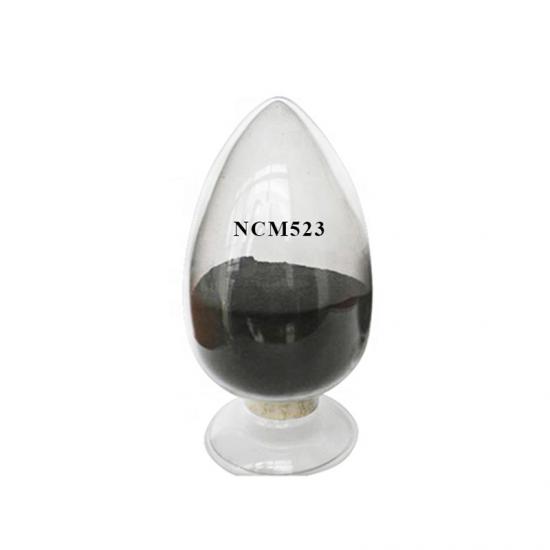
NMC precursors are classified by stoichiometry, such as NMC111, NMC523, NMC622, and NMC811, with higher Ni content delivering higher capacity. High-nickel NMC (Ni ≥ 60%) is preferred for long-range EVs due to superior specific capacity (~180–210 mAh g⁻¹). However, high-Ni systems face challenges including cation mixing, poor thermal stability, and surface reactivity. A well-designed precursor mitigates these issues by ensuring uniform elemental distribution, dense spherical secondary particles, and controlled primary particle size.
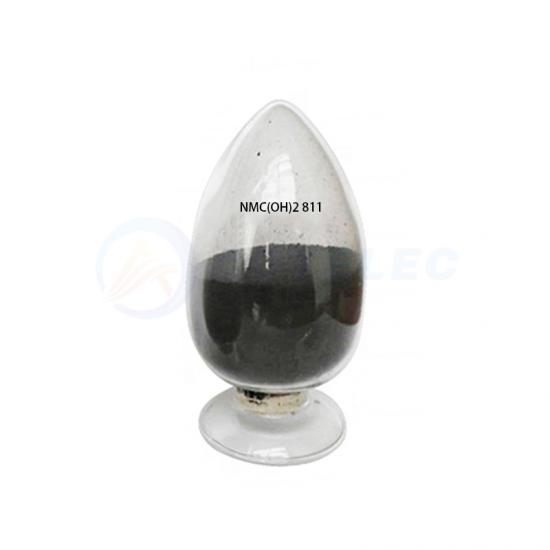
Hydroxide co-precipitation is the industrial standard for NMC precursor production. Aqueous transition-metal sulfates (NiSO₄, MnSO₄, CoSO₄) are mixed with sodium hydroxide (NaOH) as precipitant and ammonia (NH₃·H₂O) as chelating agent in a continuously stirred tank reactor (CSTR) under inert N₂ atmosphere to prevent Mn²⁺ oxidation. Typical conditions are pH 10.5–12.0, temperature 40–60 °C, and controlled feeding rate. Ammonia forms soluble metal-ammonia complexes, slowing precipitation to favor uniform nucleation and growth. The reaction yields spherical agglomerates of nanoscale primary particles, ensuring high tap density (~2.0–2.4 g cm⁻³) and good flowability. After filtration, washing, and drying at 100–120 °C, the precursor is calcined with lithium hydroxide (LiOH·H₂O) or lithium carbonate (Li₂CO₃) at 850–950 °C under oxygen flow to form layered NMC oxide.
Carbonate co-precipitation uses sodium carbonate (Na₂CO₃) or urea as the precipitant, offering better chemical stability and lower cost. Urea decomposes gradually to release carbonate ions, enabling homogeneous precipitation. Carbonate precursors often yield narrower particle size distribution and improved cycling stability but require higher calcination temperatures. This method is suitable for NMC523 and NMC622, balancing cost and performance. Emerging routes include spray-drying, solvothermal, and molten-salt processes. Spray-drying enables rapid, scalable production with low wastewater, while solvothermal methods yield single-crystal precursors with enhanced structural integrity. Molten-salt synthesis produces rock-salt oxide precursors for all-dry cathode preparation, reducing solvent use.
Process parameters profoundly affect precursor properties. pH controls supersaturation: low pH causes incomplete precipitation; high pH induces rapid nucleation and small, agglomerated particles. Ammonia concentration modulates complex stability, influencing particle size and sphericity. Temperature affects reaction kinetics and crystal growth; higher temperatures promote denser particles. Stirring rate ensures uniform mixing, avoiding local concentration gradients. Reaction atmosphere prevents Mn²⁺ oxidation, preserving stoichiometry. Optimized parameters yield uniform spherical particles (D50: 3–15 μm) with low internal porosity, critical for high volumetric energy density.
Precursor morphology and composition determine cathode performance. Spherical secondary particles improve tap density and electrode compaction, boosting volumetric energy density. Uniform elemental distribution suppresses cation mixing and phase segregation, enhancing cycle life. High-nickel precursors require strict control of impurities (Na⁺, SO₄²⁻) to avoid impedance growth and capacity fading. Single-crystal precursors, derived from optimized co-precipitation or solvothermal routes, reduce grain boundaries and improve structural stability during cycling, mitigating microcracking and electrolyte decomposition.
Challenges in high-nickel precursor synthesis include Mn²⁺ oxidation, microstrain accumulation, and surface residual lithium. Solutions include inert atmosphere, chelating agents, dispersants (e.g., PVP), and two-step calcination. Precursor recycling and low-cobalt or cobalt-free designs address cost and supply risks. Continuous co-precipitation with seed-assisted growth improves batch-to-batch consistency and particle uniformity, supporting large-scale EV manufacturing.
In summary, NMC precursors are foundational to high-performance LIB cathodes. Hydroxide co-precipitation remains dominant for scalability and quality, while novel routes advance sustainability and performance. Precise control of synthesis parameters tailors morphology, composition, and crystallinity, balancing capacity, cycle life, and safety. Future research will focus on low-cobalt/high-nickel systems, single-crystal engineering, green synthesis, and advanced characterization to unlock next-generation NMC cathodes for long-range EVs and grid storage.
Tags :

Tel/Whatsapp: +8619906035385

Friend link :
AOT BATTERY IPv6 network supported
Scan to wechat: