

-
Call Us
+8619906035385 -
Email us
ping@aotbattery.com
Call Us
+8619906035385Email us
ping@aotbattery.com
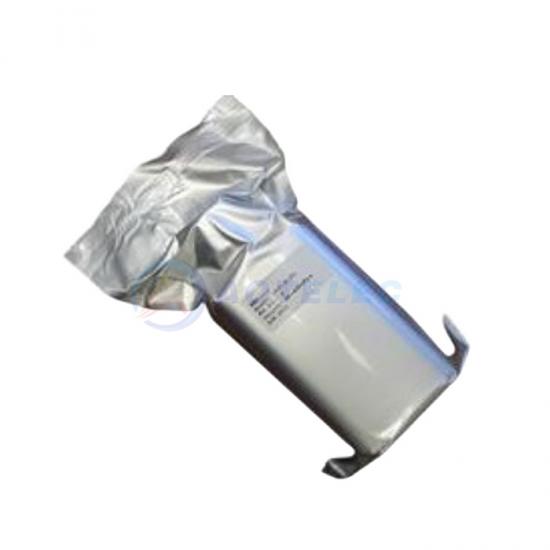
Li7P3S11 electrolyte belongs to sulfide solid electrolytes, commonly known as LPS. His most prominent advantage is his extremely high lithium-ion conductivity. This high conductivity is due to its unique crystal structure, which provides spacious and connected migration channels for lithium ions.
Synthesis Pathway of Li7P3S11 Electrolyte
Li7P3S11 electrolytes exhibit high room-temperature ionic conductivity, making them highly promising solid-state electrolytes. Therefore, exploring a low-cost, scalable synthesis pathway for high-performance Li7P3S11 solid-state electrolytes is particularly crucial. Currently, there are three primary synthesis methods for this electrolyte: molten extraction, mechanical ball milling, and liquid-phase synthesis. Research has revealed that crystalline Li7P3S11 cannot stably exist at room temperature. Through a combination of computational and experimental studies, it was found that Li7P3S11 can crystallize at 553 K (280°C), so at room temperature, it typically exists in an amorphous glassy or partially crystallized glass-ceramic state. Glass-ceramic Li7P3S11 generally cannot be synthesized in a single step and is primarily obtained by mechanically ball-milling to produce glassy Li7P3S11, by high-temperature heat treatment. Upon cooling, partially crystallized Li7P3S11 precipitates within the glass phase, forming a composite of crystalline and amorphous phases—this mixture constitutes the glass-ceramic Li7P3S11.
- Melting extraction method
Melting extraction method is a simple and rapid method for preparing Li7P3S11 solid electrolyte. It mainly involves preparing the raw materials according to the stoichiometric ratio, heating them at high temperature for a period of time in a evacuated quartz tube, and then extracting them at low temperature with ice water to form glassy Li7P3S11; Finally, the obtained glass state Li7P3S11 is heated to the crystallization temperature, and after cooling, a partial crystalline state is formed in the glass state Li7P3S11, namely the glass ceramic state.
- Mechanical ball milling method
Mechanical ball milling is a process in which raw materials are placed in a ball milling jar in a certain proportion, and a certain mass of ball milling beads are added. Then, under the conditions of controlling the ball milling speed and time, a solid-state reaction is carried out. The mechanical ball milling method, also known as high-energy ball milling, involves four processes: mixing, crushing, amorphization, and solid-state reaction, which cause high-energy collisions between raw materials through the high-speed rotation of ball milling beads. Compared with the melt extraction method, high-energy ball milling has the advantages of low processing temperature and fewer impurities, and is currently the main method for preparing Li7P3S11 electrolyte. However, materials prepared by high-energy ball milling are usually in the glass state, and subsequent heat treatment is necessary to obtain the glass ceramic Li7P3S11 electrolyte.
- Liquid phase synthesis method
Although mechanical ball milling is a common method for preparing Li7P3S11 solid electrolytes, it has disadvantages such as uneven composition of synthetic materials and easy wall adhesion during ball milling. Therefore, there are many problems in achieving large-scale preparation of high-performance Li7P3S11 electrolytes. The liquid-phase method can achieve atomic level mixing of raw materials in liquid state, and can prepare highly uniform electrolyte materials. Moreover, this method is easy to achieve large-scale industrial preparation and surface modification of electrode materials, making it a research hotspot for the preparation of sulfide solid electrolytes. According to whether precipitation is generated during the reaction process, liquid-phase methods can be divided into two types: (1) dissolution precipitation method, in which the sulfide electrolyte synthesized by ball milling is completely dissolved in organic solvents such as methanol (MT), ethanol (EA), N-methylformamide (NMF), etc., and then the organic solvents are evaporated by heat treatment; (2) Suspension synthesis method involves adding raw materials (Li2S, P2S5) to organic solvents with lower solubility to form suspended particles, and then removing organic solvents such as tetrahydrofuran (THF), dimethyl ether (DME), acetonitrile (ACN), etc. Both methods require subsequent heat treatment to remove volatile organic solvents and sintering of the obtained product to obtain glass ceramic Li7P3S11.
Main application areas
This sulfide solid electrolyte powder is mainly used for the research and manufacturing of the next generation of all solid state lithium batteries, which may involve:
Improve the energy density and safety of batteries.
Used for laboratory research, pilot production lines, or small-scale production in specific fields.

Tel/Whatsapp: +8619906035385

Friend link :
AOT BATTERY IPv6 network supported
Scan to wechat: