


-
Call Us
+8619906035385 -
Email us
ping@aotbattery.com
Call Us
+8619906035385Email us
ping@aotbattery.com
In the fast-evolving field of lithium battery technology, precision, efficiency, and reliability are the cornerstones of successful research and development (R&D). As researchers and engineers strive to enhance battery performance, energy density, and safety, the demand for advanced lab-scale coating equipment has never been higher. The Compact Lab Vacuum Spin Coater Coating Machine for Lithium Battery Coating Applications emerges as a pivotal tool, tailored specifically to meet the rigorous requirements of lithium battery electrode and electrolyte coating in laboratory settings. This compact yet powerful device combines vacuum technology with high-precision spin coating, addressing the key challenges of uniform film deposition, defect reduction, and process repeatability—critical factors that directly impact the performance of next-generation lithium batteries.
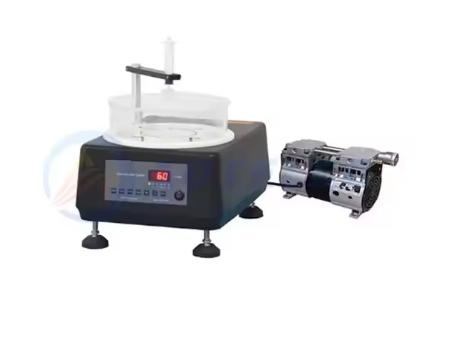
Unlike conventional spin coaters, this specialized equipment integrates a vacuum system into its compact design, making it uniquely suited for lithium battery coating applications. Lithium battery coatings, whether for cathodes, anodes, or electrolytes, require a contamination-free environment and precise control over film thickness and uniformity to avoid common defects such as pinholes, agglomerates, and uneven edges that compromise battery performance. The vacuum function of this machine effectively eliminates air bubbles in the coating slurry, a major cause of pinhole defects, while also preventing moisture and oxygen contamination—two critical culprits that degrade battery materials and reduce cycle life. This ensures that the coating process is carried out in a controlled atmosphere, laying the foundation for high-quality, consistent thin films.
The compact design of the machine is a standout feature, particularly for laboratory environments where space is often limited. Measuring significantly smaller than industrial-scale coating equipment, it can be seamlessly integrated into fume hoods, glove boxes, or small lab workstations without sacrificing performance—making it ideal for academic research labs, small-scale R&D facilities, and battery material testing centers. Despite its small footprint, the machine boasts robust construction, with an anodized aluminum shell that ensures durability and chemical resistance, capable of withstanding the harsh solvents and corrosive materials commonly used in lithium battery coating slurries.
At the core of the machine’s performance is its high-precision spin coating system, which offers adjustable rotational speeds ranging from 100 to 9999 rpm with 1 rpm resolution, allowing researchers to fine-tune coating parameters to match specific material requirements. The vacuum chuck system securely holds substrates—such as copper foil for anodes, aluminum foil for cathodes, or glass slides for electrolyte testing—preventing slippage during high-speed rotation and ensuring uniform film deposition across the entire substrate surface. This level of precision is essential for lithium battery coatings, where even minor variations in film thickness can lead to inconsistent ion conduction, reduced energy density, or thermal runaway risks.
Another key advantage of this compact lab vacuum spin coater is its versatility, adapting to a wide range of lithium battery coating applications. It is equally effective for depositing active material slurries on electrodes, fabricating thin-film electrolytes (including polymer-ceramic composites), and coating protective layers on battery components—supporting R&D for lithium-ion, lithium-sulfur, and sodium-ion batteries alike. The machine’s programmable functionality allows users to store up to 5 coating recipes, each with 5 customizable steps, enabling consistent reproduction of coating processes and accelerating research workflows by eliminating the need for repeated parameter adjustments.
In addition to its technical capabilities, the machine is designed with user-friendliness in mind. An intuitive LCD interface simplifies operation, allowing researchers to easily set and monitor spin speed, acceleration, coating duration, and vacuum pressure without specialized training. The removable spin bowl and solvent-resistant transparent lid facilitate easy cleaning and maintenance, reducing downtime between experiments and ensuring long-term reliability. The integrated oil-free vacuum pump operates quietly, minimizing lab noise pollution while avoiding oil contamination that could compromise coating quality and battery performance.
The impact of this compact lab vacuum spin coater on lithium battery R&D is significant. By enabling precise, uniform, and contamination-free coating, it helps researchers overcome common challenges in battery material development, such as poor film adhesion, uneven thickness, and defect formation. For example, in lithium-sulfur battery research, the machine’s ability to deposit uniform sulfur-carbon composite cathodes and polymer electrolytes has been shown to enhance cycling stability and reduce polysulfide dissolution—a key barrier to commercialization. Similarly, in solid-state battery R&D, it provides a reliable platform for depositing thin-film electrolytes, supporting the development of safer, higher-energy-density batteries.
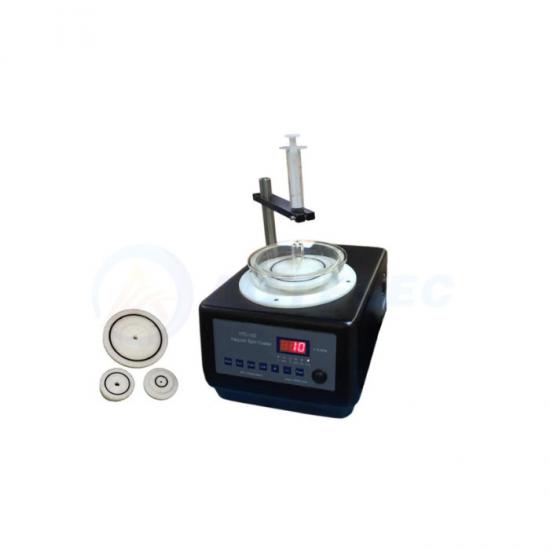
As the global push for sustainable energy storage intensifies, the need for efficient, lab-scale battery R&D tools becomes increasingly critical. The Compact Lab Vacuum Spin Coater Coating Machine for Lithium Battery Coating Applications fills this gap, offering a cost-effective, space-saving solution that does not compromise on precision or performance. Its unique combination of vacuum technology, compact design, and user-friendly operation makes it an indispensable tool for researchers and engineers working to advance lithium battery technology—from material testing and prototype development to process optimization and scale-up feasibility studies.
This compact lab vacuum spin coater redefines the standard for lithium battery coating in laboratory settings. It addresses the unique challenges of battery R&D by providing a controlled, precise, and versatile coating platform, enabling researchers to accelerate innovation and unlock the full potential of next-generation lithium batteries. Whether for academic research, industrial R&D, or material testing, this machine is a valuable investment that drives progress in the pursuit of safer, more efficient, and sustainable energy storage solutions.

Tel/Whatsapp: +8619906035385

Friend link :
AOT BATTERY IPv6 network supported
Scan to wechat: