


-
Call Us
+8619906035385 -
Email us
ping@aotbattery.com
Call Us
+8619906035385Email us
ping@aotbattery.com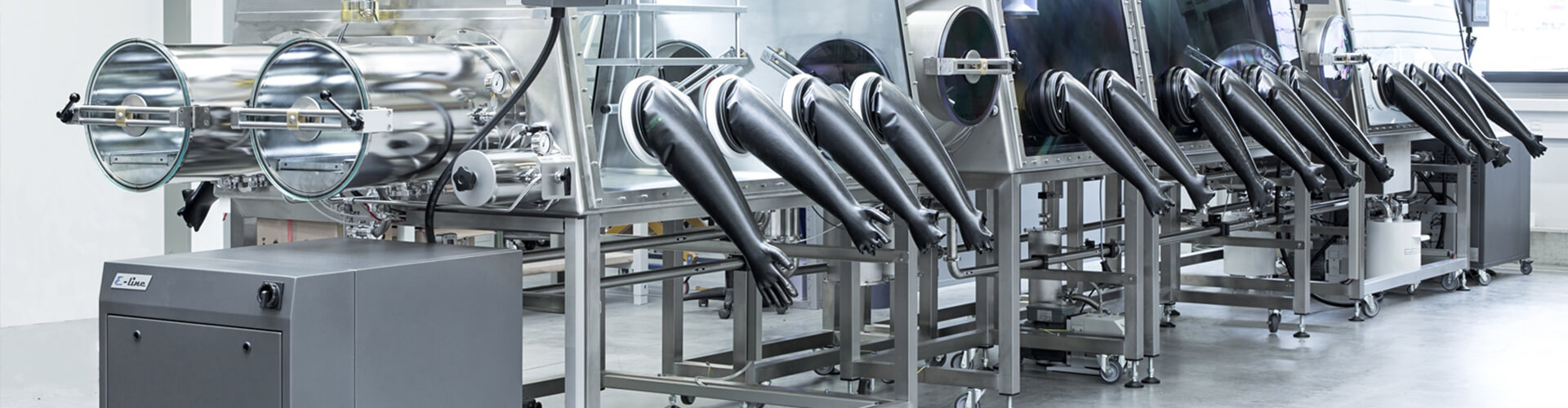
1、What is a battery slurry mixer?
The battery slurry mixer is a specialized mixing equipment specifically designed for the "slurry preparation" stage in the production process of new energy batteries (such as power batteries, energy storage batteries, solar cells, etc.). Its core function is to convert multiple-component materials such as positive and negative electrode active substances, conductive agents, binders, solvents, etc., through mechanical stirring, vacuum degassing, and other processes into a uniform, stable, free of impurities and bubbles slurry. This provides qualified raw materials for subsequent coating, electrode sheet formation, etc. processes.
The core difference between it and ordinary industrial mixers lies in: it is adapted to the special requirements of high viscosity, high solid content, low impurities, and high consistency of battery slurry. It usually integrates functions such as vacuum degassing, precise temperature control, and non-destructive dispersion to avoid the destruction of material properties. At the same time, it strictly controls key factors such as metal impurities and bubbles that affect battery performance.
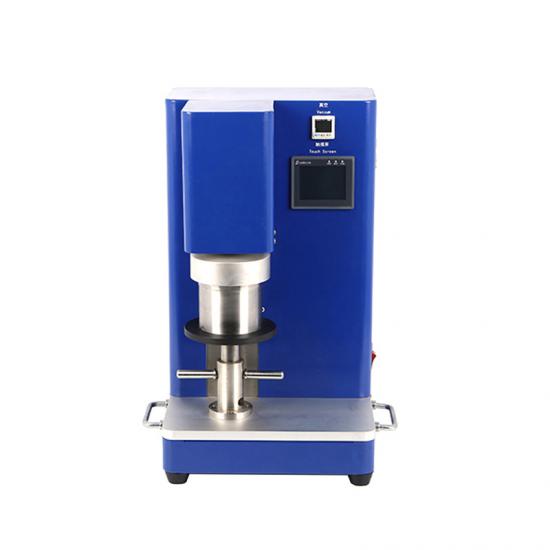
2、The core function of the battery slurry mixer
Uniform dispersion: Ensuring battery consistency
The core prerequisite for battery performance (capacity, cycle life, safety) is the uniform distribution of each component in the slurry. The mixer achieves this through a combined motion of revolution and rotation (planetary type) or double screw shearing (mass production type), breaking up material agglomerations and enabling the conductive agent, active substances, etc. to be uniformly dispersed in the solvent, avoiding resistance differences in the electrode sheet caused by uneven local concentration, and ultimately ensuring batch consistency of the battery (such as the core indicator of CV value ≤ 0.5% in the mass production scenario mentioned earlier).
Vacuum degassing: Eliminating battery safety hazards
Tiny bubbles in the slurry can cause pinholes and bulges on the electrode coating, leading to battery short circuits, thermal runaway and other safety issues. The vacuum degassing function of the mixer (with a vacuum degree as low as 50 mbar) can completely extract the air from the material, while avoiding the introduction of new bubbles during the mixing process, which is a key process step for ensuring battery safety (corresponding to a 3%-5% core benefit in the solar cell scenario for improving photoelectric conversion efficiency).
Low-loss blending: Protecting material properties
Battery raw materials (such as silicon-carbon anodes, CNT conductive agents) are expensive and have fragile physical properties. The high-speed shearing of traditional mixers can easily cause particle fragmentation and structural damage. High-quality battery paste mixers achieve uniform mixing through low shear and high torque stirring methods. They protect the original properties of the materials (such as the dispersion effect of D90 < 450nm in laboratory scenarios, without particle damage) while ensuring that the core performance of the battery is not compromised.
Controlling impurities: Reducing battery failure rate
Batteries have extremely low tolerance for metallic impurities (Fe, Cu, etc.) (typically requiring ≤ 30 ppm). Once the limit is exceeded, it accelerates internal corrosion of the battery and shortens the cycle life. Mixers use ceramic coatings, 316L stainless steel, and inert materials on contact parts (blades, barrel walls) and adopt a fully sealed design to avoid contact of the materials with external pollution and eliminate impurities generated by equipment wear at the same time. They control the failure rate of the battery from the source.
Adaptable to multiple processes: Meeting diverse production requirements
Whether it is the small-scale formula research and development in the laboratory (2-10L batch size, multi-parameter storage), or the large-scale production on the battery production line (single batch over 500L, continuous operation), the mixer can be adjusted through model and parameter settings to meet the requirements, achieving the connection of "research and development - pilot production - mass production", and reducing the equipment replacement costs of enterprises (corresponding to the comparison analysis of different equipment types for scenario adaptation logic)
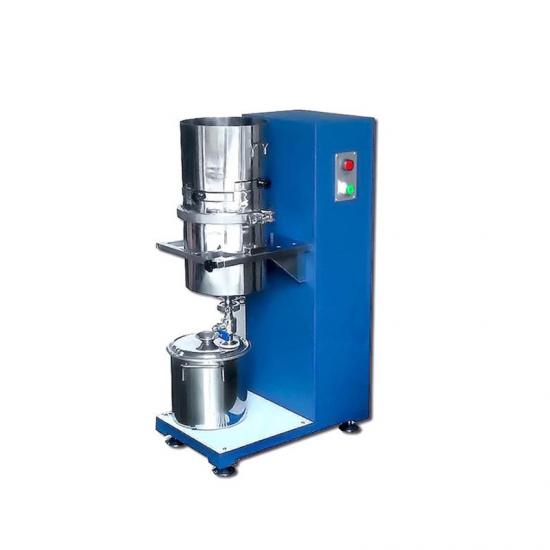
3、Comparative Analysis: Select the Right Equipment
|
Equipment type |
Advantageous scenario |
Core weakness |
|
Planetary vacuum mixer |
High-viscosity slurry, precise mixing |
Production capacity is limited (single batch ≤ 500L) |
|
Double screw pulper |
Large-scale production, high solid content slurry |
High equipment costs and complex maintenance procedures |
|
Traditional paddle mixer |
Low-viscosity slurry, low-cost requirement |
Uneven distribution and high risk of metal contamination |
4、 Frequently Asked Questions
(1) Why are the stirring blades prone to damage? How can their service life be extended?
The main reason for the blade damage is the continuous scraping by the high-hardness powder in the battery slurry (such as lithium iron phosphate, with a Mohs hardness of approximately 6). Solution: Select ceramic particle reinforced coating blades, which can extend the service life by 3-5 times; at the same time, control the stirring line speed within the reasonable range of 10-30 m/s to avoid overload operation, and check the blade wear condition monthly.
(2) How to select the type for high-viscosity slurry (>20000cP)?
The preferred options are a dual-planet power mixing machine or a twin-screw pulp-making machine. These machines must meet three core parameters: the rotational speed of the revolution should be ≥ 60R/MIN, the dispersion line speed should be ≥ 23m/s, and the torque should be suitable for high-load working conditions. The equipment should have a low-gap design (the gap between the paddle and the barrel wall is 3-4mm), to avoid the slurry "climbing" and the existence of mixing dead zones. At the same time, a zone temperature control system should be configured to prevent the abnormal increase in slurry temperature during the mixing process.
(3) How to control metal impurity contamination during the mixing process?
We address this from three aspects: ① The components in contact with the materials are made of all-ceramic or 316L stainless steel; ② Equipped with an online metal detection + automatic retention device to monitor impurities such as Fe and Cu (controlled at ≤30ppm) in real time; ③ Select a fully sealed mixing design to prevent external contaminants from entering. The sealing performance of high-quality equipment is improved by 30% compared to traditional equipment, enabling stable operation with a vacuum degree of ≤1.5Bara.
(4) What is the main difference between the laboratory mixer and the production mixer?
Laboratory equipment (2-100L) focuses on flexibility and precision, requiring support for storing multiple process parameters, rapid change of small batches, and noise ≤ 80dba; production equipment (100-1000L) has the core requirement of stability and efficiency, needing to have high production capacity, low energy consumption, easy cleaning (CIP/SIP) design, and the ability to seamlessly connect with previous and subsequent processes (pre-mixing, filtration).
(5) How does vacuum degree affect the quality of slurry mixing?
Vacuum degree directly determines the defoaming efficiency and solvent retention rate. It is recommended to control at 50-100mbar. Too low vacuum degree (>100mbar) cannot completely eliminate bubbles, resulting in increased battery internal resistance; too high vacuum degree (<50mbar) will cause excessive evaporation of NMP and other solvents, damaging the rheological properties of the slurry. High-quality equipment has a vacuum fluctuation of ≤ ±10mbar to ensure process stability.

Tel/Whatsapp: +8619906035385

Friend link :
AOT BATTERY IPv6 network supported
Scan to wechat: