


-
Call Us
+8619906035385 -
Email us
ping@aotbattery.com
Call Us
+8619906035385Email us
ping@aotbattery.com
The global demand for high-performance, safe, and cost-effective energy storage solutions has never been greater, driven by the rapid growth of electric vehicles (EVs), renewable energy integration, and portable electronics. At the heart of every advanced lithium-ion battery lies the cathode material, which determines key performance metrics such as energy density, cycle life, safety, and cost. Among the emerging cathode technologies, LMFP-STL64 Lithium Iron Manganese Phosphate (LiMnxFe1-xPO4) powder stands out as a transformative innovation, combining the best attributes of traditional lithium iron phosphate (LFP) and high-voltage manganese-based materials. This article explores the properties, advantages, and applications of LMFP-STL64, while examining its role in the broader landscape of battery cathode materials.
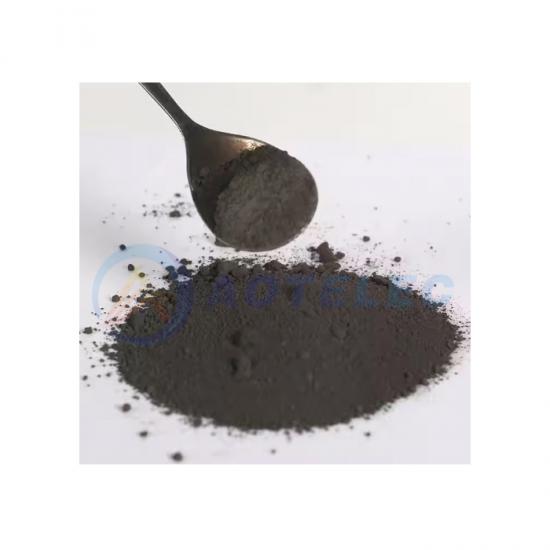
LMFP-STL64 is an olivine-structured cathode material engineered through precise stoichiometric control and advanced surface modification, designed to overcome the limitations of conventional LFP. While LFP has long been favored for its exceptional safety, long cycle life, and low cost, its relatively low operating voltage (3.2–3.4 V) and moderate energy density restrict its use in high-range EVs and compact energy storage systems. LMFP-STL64 addresses this by incorporating manganese into the LFP crystal structure, elevating its discharge voltage plateau to 3.9–4.1 V—a nearly 20% increase. This voltage boost, paired with a theoretical specific capacity of 190–200 mAh/g, pushes its energy density to 165–210 Wh/kg, 15–22% higher than standard LFP. Importantly, LMFP-STL64 retains the robust phosphate framework of LFP, where strong P-O covalent bonds prevent oxygen release under high temperatures, eliminating the risk of thermal runaway and ensuring unparalleled safety.
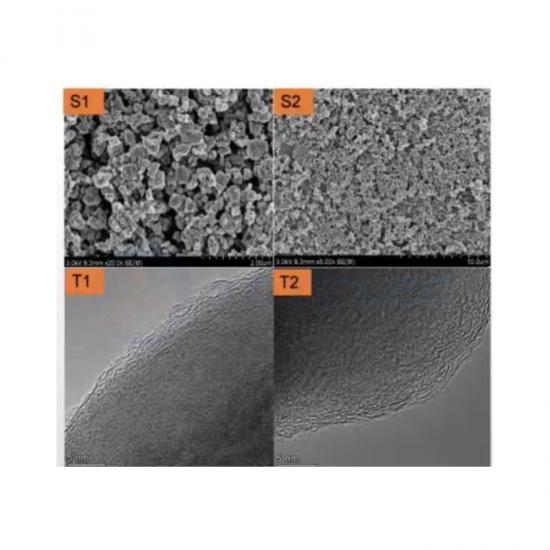
The industrial viability of LMFP-STL64 is further enhanced by its optimized powder characteristics. As a high-purity cathode powder, it features a uniform particle size distribution, high tap density, and excellent dispersibility, making it fully compatible with existing battery manufacturing processes. Advanced synthesis techniques, including nanocrystallization and carbon coating, improve its electronic conductivity and lithium-ion diffusion kinetics, solving the inherent low conductivity of phosphate materials. This modification enables faster charging and discharging rates, a critical requirement for modern EVs. Additionally, LMFP-STL64 exhibits outstanding low-temperature performance, maintaining over 80% of its capacity at -20°C—far superior to many LFP variants—expanding its usability in cold climates. A key advantage of LMFP-STL64 is its cobalt-free and nickel-free composition, relying on earth-abundant iron and manganese. This not only reduces raw material costs by 10–15% compared to nickel-cobalt-manganese (NCM) materials but also mitigates supply chain risks and ethical concerns associated with cobalt mining.
To fully appreciate LMFP-STL64’s significance, it is essential to contextualize it within the evolving battery material ecosystem. Traditional cathode materials can be divided into three main categories: olivine phosphates (LFP), layered oxides (NCM/NCA), and spinel oxides (LMO). LFP dominates the energy storage and low-cost EV markets due to safety and affordability but lacks energy density. NCM and NCA materials offer high energy density, making them ideal for long-range EVs, but suffer from higher costs, thermal instability, and reliance on scarce cobalt and nickel. Spinel lithium manganese oxide (LMO) is low-cost but has limited cycle life and poor high-temperature stability. Newer alternatives, such as nickel-rich layered oxides and manganese-rich cathodes, aim to reduce cobalt content but face challenges in cycle stability and manufacturing scalability.
LMFP-STL64 occupies a unique "middle ground" in this landscape, bridging the performance gap between LFP and NCM without compromising safety or cost. It represents a practical, sustainable solution for the next generation of batteries, aligning with the industry’s shift toward cobalt-free, high-safety, and high-energy-density materials. Beyond LMFP, research into related phosphate-based materials, such as high-manganese LMFP and single-crystal LFP, is accelerating, with LMFP-STL64 serving as a proof of concept for phosphate material optimization. Concurrently, the development of solid-state batteries is driving demand for cathode materials with high compatibility with solid electrolytes, and LMFP-STL64’s stable structure makes it a promising candidate for solid-state battery integration.
The applications of LMFP-STL64 are vast and diverse. In the EV sector, it enables the production of mid-range electric passenger vehicles and commercial vehicles with longer driving ranges, faster charging times, and lower production costs, while maintaining the safety that LFP is known for. In grid-scale energy storage, LMFP-STL64 batteries offer higher system energy density, reducing installation footprint and total project costs compared to LFP-based systems. It is also ideal for electric two-wheelers, industrial energy storage, and backup power systems, where a balance of performance, safety, and affordability is critical. As manufacturing scales up, LMFP-STL64 is expected to replace a significant portion of LFP and low-nickel NCM materials in the coming decade.
Looking ahead, the future of battery cathode materials will be defined by four core principles: high energy density, exceptional safety, low cost, and environmental sustainability. LMFP-STL64 is poised to lead this transition, with ongoing research focused on further increasing manganese content, enhancing fast-charging capabilities, and extending cycle life beyond 4000 cycles. Complementary advancements in anode materials (such as silicon-carbon anodes) and electrolytes will further amplify LMFP-STL64’s performance, creating fully optimized battery systems.
LMFP-STL64 Lithium Iron Manganese Phosphate Powder is more than just an upgraded cathode material—it is a cornerstone of the global energy transition. By merging the safety and cost benefits of LFP with the higher energy density of manganese-based materials, it addresses the most pressing challenges facing lithium-ion batteries today. As the world moves toward a low-carbon future, LMFP-STL64 will play a pivotal role in powering electric transportation and enabling reliable, affordable energy storage, solidifying its place as a key innovation in the evolution of battery technology.

Tel/Whatsapp: +8619906035385

Friend link :
AOT BATTERY IPv6 network supported
Scan to wechat: