


-
Call Us
+8619906035385 -
Email us
ping@aotbattery.com
Call Us
+8619906035385Email us
ping@aotbattery.com
Against the backdrop of accelerating global energy transition to green and low-carbon development and continuous breakthroughs in new energy technologies, high-performance porous metal materials represented bynickel foam have become core foundational materials in batteries, hydrogen energy, environmental protection, industrial heating and other fields thanks to their unique structural advantages and stable physical and chemical properties, providing key support for the development of high-end equipment manufacturing and clean energy industries. As a functional metal material with a 3D network structure, nickel foam breaks the performance limitations of traditional dense metals, and reshapes the application paradigm of electrode materials, catalyst supports and filter media with its comprehensive characteristics of light weight, high permeability, strong electrical conductivity and corrosion resistance, promoting efficiency improvement and cost optimization in related industries.
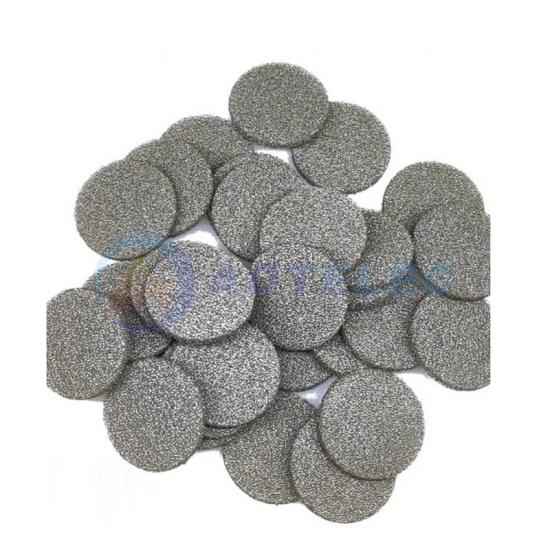
Nickel foam is a porous metal material meticulously manufactured with metallic nickel as the core raw material, usually supplied in sheets and customizable to meet diverse industrial scenarios. The standard sheet size is 200mm×300mm, and personalized customization is also supported to satisfy different demands of special equipment, R&D and large-scale production. In terms of thickness, the product covers mainstream specifications of 0.5mm, 1.0mm, 1.5mm and 2.0mm, which can be precisely selected according to electrode loading, structural strength, fluid permeability and other requirements, balancing practicality and economy.
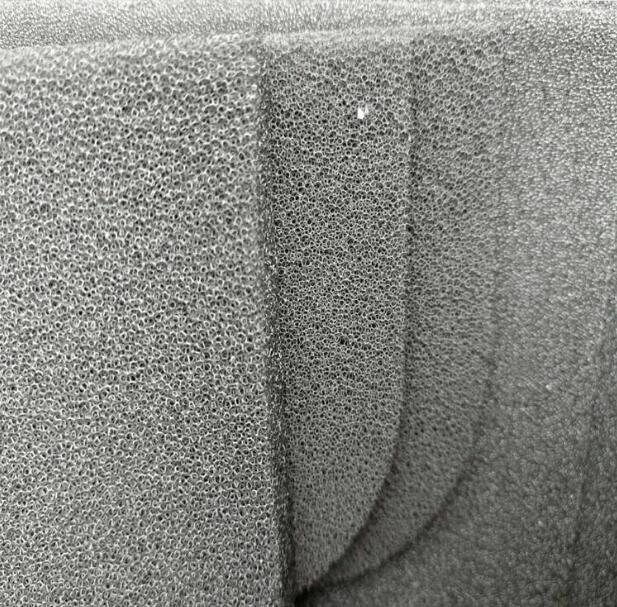
Pore size and porosity are the core parameters determining the performance of nickel foam and the key to its adaptation to multi-field applications. At present, the mainstream pore size specification in the industry is 110 PPI, and a wide adjustable range of 5-130 PPI is achievable, which can precisely match the pore size requirements of different scenarios such as battery electrodes, catalyst supports and filter materials. In terms of porosity, nickel foam can reach an ultra-high level of 75%-98%, with a through-hole rate of no less than 98%. This nearly fully transparent 3D pore structure not only greatly increases the specific surface area, but also ensures efficient circulation of gases and liquids, providing an ideal carrier for electrochemical reactions, mass transfer and heat exchange. In addition, the bulk density of the product is controlled at 0.1-0.8g/cm³, achieving extreme light weight while ensuring structural strength, effectively reducing the overall weight of equipment and conforming to the lightweight development trend of new energy equipment, aerospace and other fields.
Compared with traditional metal materials, the core competitiveness of nickel foam lies in the perfect integration of structure and performance. Its 3D continuous nickel metal skeleton ensures excellent electrical and thermal conductivity, enabling rapid current and heat transfer and avoiding problems such as electrode polarization and heat accumulation; the interconnected porous structure not only reduces material weight, but also provides sufficient space for active material loading, electrolyte penetration and ion transport, significantly improving reaction efficiency; the inherent high temperature resistance and acid-alkali corrosion resistance of metallic nickel endow nickel foam with strong environmental adaptability, maintaining stable performance under harsh working conditions and extending service life of equipment. These advantages enable nickel foam to break through the application boundaries of traditional materials and become the preferred material for upgrading in multiple fields.
In the field of new energy batteries, nickel foam is a well-deserved core electrode material, widely used in various energy storage battery systems such as lithium-ion batteries, nickel-metal hydride batteries and solid-state batteries. As the substrate and current collector of battery electrodes, its high specific surface area can greatly increase the loading of active materials and enhance electrode capacity; the 3D conductive network reduces electron transport resistance and improves the charge-discharge efficiency and power density of batteries; the uniform pore structure can alleviate volume expansion during battery charge-discharge cycles, suppress lithium dendrite formation, and improve battery cycle life and safety. Whether for small batteries for consumer electronics, or power batteries and energy storage batteries for new energy vehicles and energy storage power stations, nickel foam can meet the precise requirements of different battery systems for pore size, thickness and porosity through customized specifications, helping to improve both energy density and stability of batteries.
In addition to the battery field, nickel foam is also widely used in environmental protection and industrial sectors. In exhaust gas purification, its high temperature resistance and corrosion resistance make it an ideal carrier material for exhaust gas purifiers, which can load catalytic active substances to efficiently degrade harmful components in industrial exhaust gas and ensure environmental compliance of industrial production; in the field of filtration and separation, relying on high through-hole rate and precise pore size adjustment, it can be used as a high temperature and acid-alkali corrosion resistant filter material for high-temperature fluid and corrosive liquid filtration in chemical, metallurgical and other industries, achieving efficient material separation and purification.
In energy equipment and civil fields, the application value of nickel foam continues to expand. As a support for various catalysts, its high specific surface area can improve catalytic reaction efficiency and reduce catalyst loss, and it is widely used in hydrogen energy industry links such as water electrolysis for hydrogen production and fuel cells, facilitating large-scale application of hydrogen energy; in the field of infrared burners and heating equipment, nickel foam can be used as a surface combustion material to achieve uniform heat release and improve heating efficiency, and is widely used in industrial drying equipment, civil heating equipment and other scenarios, combining energy saving and practicality.
At present, the rapid development of the global clean energy industry, accelerated iteration of battery technologies, large-scale promotion of hydrogen energy industry and continuous upgrading of environmental protection requirements have brought a broad market space for nickel foam. With the continuous improvement of performance requirements from downstream industries, nickel foam is developing towards high uniformity, high precision, multi-functionality and customization. Precise control of pore size, porosity and thickness is realized through process optimization to further enhance material consistency and stability, meeting the application needs of high-end equipment and cutting-edge technologies. Meanwhile, the coordinated promotion of large-scale production and technological innovation will continue to reduce production costs and promote the popularization and application of nickel foam in more fields.
As a key link connecting basic materials and high-end manufacturing, nickel foam has become an "invisible cornerstone" in the process of energy revolution and industrial upgrading with its all-round application advantages, from the core support of battery electrodes to the efficient empowerment of catalyst supports, from the reliable guarantee of environmental protection and purification to the energy-saving efficiency enhancement of industrial heating.
In the future, with the continuous breakthroughs in new energy technologies and the intelligent upgrading of industrial manufacturing, the application scenarios of nickel foam will continue to expand and its performance will continue to improve. Against the wave of global green development, this high-performance porous metal material will continue to play a core supporting role, accelerate the development of clean energy industry and upgrade the efficiency of industrial manufacturing, injecting solid impetus into achieving carbon peaking and carbon neutrality goals and building a green and low-carbon industrial system, and writing a new chapter of industrial innovation empowered by high-performance functional materials.

Tel/Whatsapp: +8619906035385

Friend link :
AOT BATTERY IPv6 network supported
Scan to wechat: